

🌊 November in the Maldives is a moment of change. The southwest monsoon is easing, the northeast season is approaching, and the islands settle into a quieter rhythm before the festive rush. You may find more attractive rates than in the December peak, warm clear water and a remarkable overlap in the seasons for whale sharks and manta rays.
It is a connoisseur’s month, not a promise of perfect sunshine or guaranteed wildlife, but a thoughtful balance of possibility, tranquillity and value. At Raheem Tours, we can help you choose an island and hotel that feel serene rather than busy, then shape the details around the experience you want.
🌀 Why November sits between the seasons
The Maldives’ weather is shaped by two monsoons. The southwest Hulhangu season generally brings more rain and stronger winds from around May to October, while the northeast Iruvai season is typically drier from December to March. November is a transition: winds can become variable, showers still pass through, and brighter, calmer intervals begin to appear.
That means November isn’t reliably “dry season” yet. Conditions vary by atoll and year; water clarity and boat trips depend on local weather, currents and sea state. The Maldives Meteorological Service’s climate information is a useful reference, but it can’t predict your exact week months in advance.
| Travel window | What it can feel like | The trade-off |
|---|---|---|
| November | A changing season, warm lagoon and more chances of calm, sunny intervals | Showers and variable conditions remain possible; rates vary by island |
| December | Drier weather becomes more established | Festive demand and peak-season pricing begin |
| January–April | The classic drier months, often favoured for settled beach days | Higher demand and, commonly, higher prices |
| May–October | Southwest monsoon brings more changeable weather | Often a lower-price period, with seasonal wildlife opportunities |
November often offers better value than the December-to-March high-demand stretch, particularly before holiday weeks, but there is no single island-wide discount. Room type, resort, flight dates and minimum-stay rules all matter. Water remains inviting at roughly 27–30°C year-round.
🐋 South Ari: the whale-shark encounter
South Ari Atoll is the best-known place to look for whale sharks in the Maldives. Around Maamigili Whale Shark Marine Protected Area, these gentle filter-feeders are recorded throughout the year, with sightings often strongest roughly from August to November. That puts November inside a favourable window, not outside it.

An outing usually begins with a local boat scanning the water with an experienced guide. If a shark is spotted, your group enters calmly and swims alongside only when it is safe, never touching, chasing, blocking or crossing in front of the animal. Follow the crew’s instructions, keep a respectful distance, and avoid flash photography.
Choose operators who respect the local code of conduct and the marine protected area’s rules. Wildlife is wild: sightings can be common in season, but no responsible operator can promise one on a particular day. The encounter is still worthwhile for the way it asks you to slow down, look carefully and share the water on the animal’s terms.
🪽 Manta season: an overlapping chance
November can also bring manta encounters, although the seasonal picture depends on where you go. Hanifaru Bay in Baa Atoll, within the UNESCO Biosphere Reserve, is famous for manta feeding gatherings as plankton concentrates in the bay. The strongest spectacles are generally associated with roughly June to October; November can still offer encounters, but it is toward the later edge of that window.
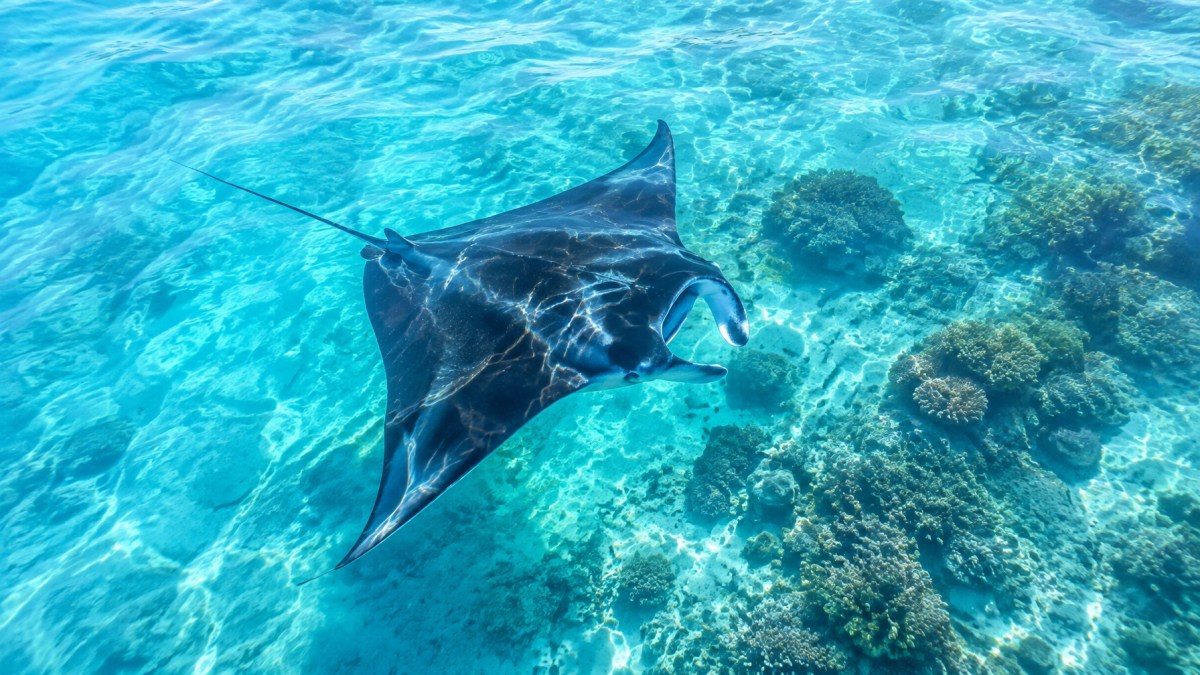
Manta seasons vary around the atolls: west-facing sides often see more activity around June to November, while east-facing sides can be more active from November to April. The transition makes November a useful overlap month, but not a guarantee of a dramatic gathering. Ari Atoll also has manta sites, and some operators offer night dives at selected locations when conditions and responsible practices allow.
Hanifaru is a protected site, so access and activity are regulated. Use a permitted, knowledgeable guide; never touch, chase or block a ray, and keep clear of its path. Avoid sunscreen before a manta excursion where possible, choose a rash vest and follow your guide’s advice on reef-conscious products. The Maldives Manta Conservation Programme and Visit Maldives’ guide to gentle giants offer further context.
🐢 More than the headline sightings
A good house reef can turn an ordinary afternoon into the heart of your stay. Look for blacktip and whitetip reef sharks, nurse sharks, turtles at established reef sites, eagle rays and dolphins passing in the softer light of dusk. The exact sightings differ from island to island, and even from one swim to the next.

This is why we ask about house-reef quality as carefully as the villa category. Some islands offer an easy swim from shore into thriving reef; others are better suited to long lagoon swims and boat excursions. A beautiful overwater villa is special, but the reef you can reach at dawn may be what stays with you longest.
🏝️ Choosing your island, and your kind of quiet
North Malé is convenient for the airport and offers the familiar resort-island experience. South Ari is a natural choice if whale sharks are high on your list. Baa Atoll brings a more secluded feel, with Hanifaru Bay as a seasonal draw. For a more remote, less-visited atmosphere, consider Addu and the deep south.
Local islands such as Dhigurah and Maamigili offer guesthouses, village life and access to whale-shark excursions, often at a more accessible price. Private resort islands bring greater seclusion, a wider range of services and the ease of having everything arranged around you. Neither is automatically “better”; it comes down to whether you want a connection with local island life or a self-contained retreat.
On a private island, choose between an overwater villa with direct lagoon access and a beach villa shaded by palms, where the sand is only steps away. Small islands can feel wonderfully intimate: barefoot from your room to breakfast, with the lagoon always in view. In the shoulder season, some resorts may offer better-value overwater stays than in peak winter, though rates depend on dates and availability.
🌅 Beyond the lagoon
A sandbank picnic, a castaway afternoon, sunrise yoga or a spa treatment above the water adds a different texture to the days. Try a house-reef snorkel early, when the lagoon is quiet, then leave the afternoon open for a long lunch and the slow return of the light.
For distant atolls, a seaplane transfer can be part of the journey itself: reefs and tiny islands unfolding beneath you. Seaplanes generally operate only in daylight, so arrival times matter; depending on your resort, a speedboat or domestic-flight connection may be more practical. Transfer costs and timings vary, so check the full itinerary before you confirm.
✈️ Planning your November escape
From the UK, allow roughly 10–11 hours for a direct flight to Malé, plus your resort transfer; connecting journeys take longer. Seven nights is the classic stay. Enough time to settle into island life and plan a couple of marine excursions without turning every day into a schedule.
If you want both whale sharks and mantas, we can explore a package combining South Ari and Baa Atoll. An island-hopping stay gives you a wider set of possibilities, but adds transfer time and cost; a single-atoll holiday can feel more restful. Wherever you stay, arrange travel insurance that explicitly covers the snorkelling or diving activities you plan to do.
For November and winter 2027, small-island retreats and sought-after overwater villas can book early, even outside the festive peak. Planning ahead gives you more choice; if your dates are closer, we can also handle last-minute requests and check what remains available. Explore our tours or get in touch with Raheem Tours to talk through the right island, transfer and hotel for you.
November is not the Maldives at its most predictable. That is part of its appeal: a quieter threshold between seasons, where the lagoon stays warm, the wildlife remains wonderfully possible, and the islands have not yet reached their winter crescendo.
Timeless travel, whenever wherever.
Planning your own lagoon escape? Comment LAGOON on our Instagram post and we’ll send you the direct blog link by DM.
