

🌿 A safari turned inside out
Some rivers rush towards the sea. The Okavango does something more mysterious: fed by rain in Angola’s highlands, its waters travel south and spread across Botswana’s Kalahari, forming an immense inland oasis. The remarkable twist is the timing. The flood arrives in Botswana’s dry season, when wildlife gathers around water and game viewing is often at its best.
Here, your classic safari vehicle shares the stage with a slender dugout canoe. You drift through papyrus channels, scan golden islands for elephants, then return to a small camp where dinner is served beneath an astonishing sky. For a bucket list journey in Africa, the Delta is the safari connoisseur’s choice, and a natural next chapter after Namibia’s quieter desert landscapes.
The experience is deliberately intimate. Botswana’s high-cost, low-impact tourism model keeps many camps small and visitor numbers limited. That helps preserve a sense of space, but it also means prices are high. In return, you find quiet concessions, thoughtful guiding and a rare feeling of having the wilderness to yourself.
🛶 The mokoro: the beauty of going slowly
The signature Delta experience is a mokoro ride. Your poler stands at the stern, guiding the canoe with a long pole through narrow channels edged with reeds and water lilies. There’s no engine, just the whisper of water against the hull, frogs hidden in the vegetation and flashes of kingfishers or bee-eaters close at hand.
The stillness is the point. A mokoro is serene rather than high-adrenaline: wildlife may be close, but the pace is gentle. Local polers from Delta villages are central to the experience, sharing an intimate knowledge of channels and seasonal changes. For a genuine first-hand local perspective, take time to listen and ask respectful questions; their expertise is part of what makes the journey meaningful.
Water levels differ by year and location, so a mokoro ride isn’t guaranteed at every camp or on every date. Ask the camp what conditions and activities are expected for your stay, and what alternatives, such as game drives, they’ll arrange if channels are too low.

📅 When to go: the best month to travel
The Delta’s flood is driven by rainfall in Angola months earlier, not by rain falling locally in Botswana. Its arrival overlaps with Botswana’s dry season, creating the unusual conditions that make the region so compelling. Water levels vary from year to year, and different areas can peak at different times.
| Season | What to expect | Best suited to |
|---|---|---|
| May–October: dry season | Peak flood generally falls around June–August; cool nights, excellent game viewing and the strongest chance of water-based activities. Prices are highest. | Classic safari conditions, with July–September a popular choice |
| November–March: green season | Lower Delta water, local rains, greener scenery, newborn animals and migratory birds. Bush can be thicker, and some access is more challenging; rates may be lower. | Birding, young wildlife and a quieter-value trip |
| April and November: transitions | Conditions can shift between seasons; water and rainfall differ by year and area. | Flexible travellers who value shoulder-season possibilities |
For a balanced wildlife & nature itinerary, June to August can be a rewarding time to combine game drives with mokoro or boating. Subject to local water levels. Later in the dry season, wildlife may concentrate around remaining water, while October can be very hot. Green season brings its own beauty, but water activities are less predictable. Confirm what’s operating with your camp before you book.
🐘 Waterways, predators and open floodplain
The Delta offers remarkable wildlife, but no sighting is guaranteed. Elephants move between islands and water’s edge; lechwe bound through shallows; buffalo herds cross open plains. Lions here are known to swim, leopards patrol riverine forests, and the region is among Africa’s best places to look for wild dogs. Rhino have also been reintroduced in some areas.
Guides make the difference: reading tracks, choosing routes and knowing when to wait. Game drives reveal a striking contrast to the quiet mokoro: wide floodplains, shaded woodland and the sudden drama of a predator sighting.
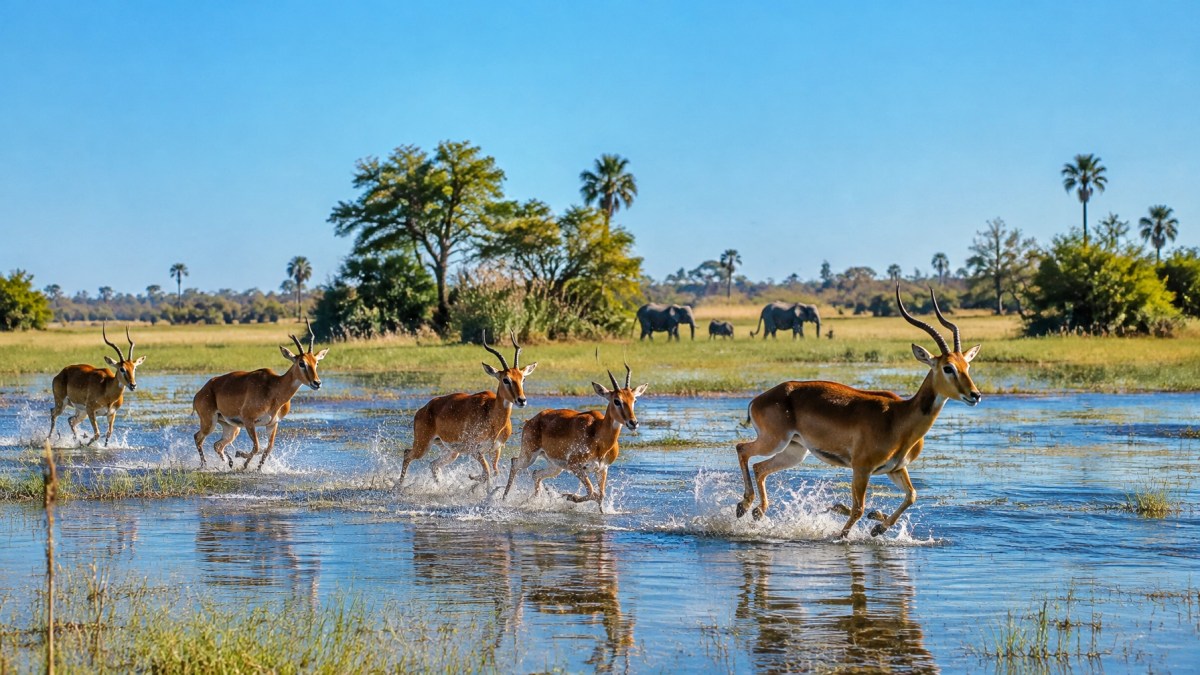
Moremi Game Reserve protects a large section of the Delta and offers excellent wildlife viewing. Nearby, the Khwai community area brings a different perspective: community-run camps and concessions, with activities that may include night drives or walks where permitted. The reserve and Khwai are distinct areas, and visitor levels and rules differ. Private concessions typically offer more seclusion; check the specific camp’s location and activity permissions when comparing options.
🏕️ Small camps, considered luxury
Botswana’s luxury is less about spectacle than space: a private deck over a floodplain, an outdoor shower screened by foliage, and a camp that feels beautifully removed from the world. That “beautiful but never too lively” quality comes naturally in a destination built around small-scale tourism.
Examples in the high-end camp tier include Vumbura Plains, Mombo, Xigera, Sanctuary Chief’s Camp, andBeyond Nxabega and Xudum, as well as camps in the Wilderness portfolio. These are examples, not endorsements; style, location, activities and inclusions vary. Check what’s included in your quote, especially transfers, drinks and concession fees.
Many camps are reached by light aircraft from Maun. The flight is part of the adventure: from above, channels braid around islands and floodplains, revealing the Delta’s extraordinary shape. Depending on location and conditions, your days may include boat cruises, sunset drinks on the water or catch-and-release tigerfish angling. Some camps offer a star-bed or sleep-out: an unforgettable way to experience the night sky, when available and weather permitting.

Camp life has its own gentle rhythm: an early drive, brunch, a long siesta, afternoon tea, then an evening activity before dinner under the stars. Expect thoughtful cooking, sometimes over open fires, and the occasional bush breakfast in the wild. Many Botswana camps are designed as all-inclusive stays, with meals, drinks and activities arranged together, check exactly what your chosen camp includes.
For a different view, scenic helicopter and fixed-wing flights trace the Delta’s channels from above. Doors-off flights may be available for photographers, subject to operator, safety and weather conditions.
🗺️ Beyond the Delta: a longer Botswana journey
For a cultural extension, Tsodilo Hills in the north-west is a UNESCO World Heritage site with thousands of rock paintings and deep significance to local communities. Often called the “Louvre of the Desert,” it deserves time, a knowledgeable guide and respectful planning, not a rushed detour.
For a striking landscape contrast, Nxai Pan and the Makgadikgadi salt pans trade waterways for wide, dry horizons. In the green season, zebra migrations and newborns may draw wildlife-watchers; meerkats and, in suitable dry-season conditions and permitted areas, quad-bike excursions offer a different kind of adventure. Timing varies, so treat wildlife events as a possibility rather than a promise.
Chobe pairs naturally with the Delta. Its river attracts impressive seasonal elephant concentrations, and a sunset cruise offers an entirely different scale of water safari. The honest contrast: Chobe’s riverfront can be much busier in peak season than a private Delta concession. That is part of why Botswana’s quieter, higher-cost Delta experience holds such appeal.
✈️ Practical notes for planning
From the UK, allow roughly 14–16 hours or more with connections, commonly routing via Johannesburg or Cape Town. Maun is the main gateway to the Delta; Kasane is useful for Chobe. Lodge itineraries typically use light-aircraft transfers to bush airstrips. Seven nights is a good starting point: spend two or three nights at a water-oriented camp and the rest in a land-focused area such as Moremi or Khwai. A ten-night trip can add Chobe or the salt pans. We can tailor either fly-in route to your pace and interests, speak with Raheem Tours.
Small aircraft have strict baggage limits that vary by operator. Confirm the exact allowance before packing, including camera gear, and use a soft-sided bag. Neutral clothing, warm layers for genuinely cold June–August mornings, binoculars and a camera zoom lens are useful. Arrange comprehensive travel insurance that covers light-aircraft transfers and remote medical evacuation.
The Delta is a malaria area. Check current advice with TravelHealthPro and a travel-health professional; discuss appropriate precautions and medication, and use bite protection. For British travellers, recheck FCDO Botswana entry guidance before departure, as requirements can change. Botswana’s currency is the pula; camps are generally prepaid, so confirm payment arrangements in advance.
Travel gently: never feed or touch wildlife, respect mokoro channels and follow your guide’s instructions. Support community-run camps where possible, and stay on permitted routes, particularly when travelling outside private concessions.
✨ A thoughtful time to book
Top camps often sell out six to twelve months ahead for June–October, especially July–September. Green-season dates may offer more availability and lower rates. If you’re planning for 2027, earlier is wiser for specific camps and flight connections; if your dates are close, we can still check what remains available.
The Okavango is an adventure travel experience shaped by water, patience and a profound sense of space. Explore our Africa destination guides and holidays, or comment DELTA on our Instagram post and we’ll send you the direct link by DM.
Timeless travel, whenever wherever.
