




 Raheem Tours
26 November 2026
Raheem Tours
26 November 2026
Culture in the centre, cool in the hills, sand at the bottom. For a UK-winter escape, Sri Lanka brings three distinct moods into one beautifully connected journey: Kandy’s living traditions, tea-country mornings above the clouds, and warm southern shores beneath wide blue skies.
The south-west circuit is at its best from December to March, especially for coastal sunshine and calmer seas. November can bring showers, while the hill country is cooler and changeable year-round. If you’re planning a summer visit, our separate east-coast guide covers a different season and route; Sri Lanka rewards you for following its weather, not fighting it.
After a long flight, let Colombo be your transition rather than trying to make it the whole holiday. One night is usually enough to reset, enjoy a good meal and get your bearings before heading inland.
At dusk, Galle Face Green opens onto the Indian Ocean. Families stroll, kites lift in the breeze, and the city’s bustle softens around you. Then sleep well: you’ll soon be travelling towards the hills.
Set among green hills, Kandy is the cultural heart of the route. At the Sri Dalada Maligawa, or Temple of the Sacred Tooth Relic, a revered relic gives the temple profound importance in Sri Lankan Buddhism. Visitors may observe puja ceremonies, when offerings, drumming and devotional practice bring the shrine to life. Keep shoulders and knees covered, remove shoes where requested, speak quietly and follow staff guidance; never turn your back to the shrine for a photo.

For a slower rhythm, walk the Kandy Lake circuit, then spend an unhurried morning at the Royal Botanical Gardens in Peradeniya. The orchid house rewards a close look; the avenue of royal palms seems to draw the sky into a green corridor.

In the evening, a Kandyan dance performance brings movement, costume and drumming together: watch attentively, and ask before photographing performers. Kandy is atmospheric, but traffic-heavy. Our advice: choose a peaceful hotel in the hills above the city, where birdsong can replace the horns.
The railway from Kandy towards Ella is one of Asia’s great train journeys, winding through a landscape that shifts from dense green hills to tea terraces and cloud-brushed peaks. For a more comfortable ride, look for a reserved observation-class seat where available; second class can also be a memorable way to share the journey. Popular reserved seats go quickly. Reservations open through the official Sri Lanka Railways portal, so check availability and book as soon as your travel window opens.

Pause around Nuwara Eliya, whose colonial-era details have earned it the nickname “Little England”. The racecourse and old-world buildings tell one part of the story; the altitude tells another. At more than 1,800 metres, evenings can feel genuinely chilly, pack a jumper, even when the coast is warm.
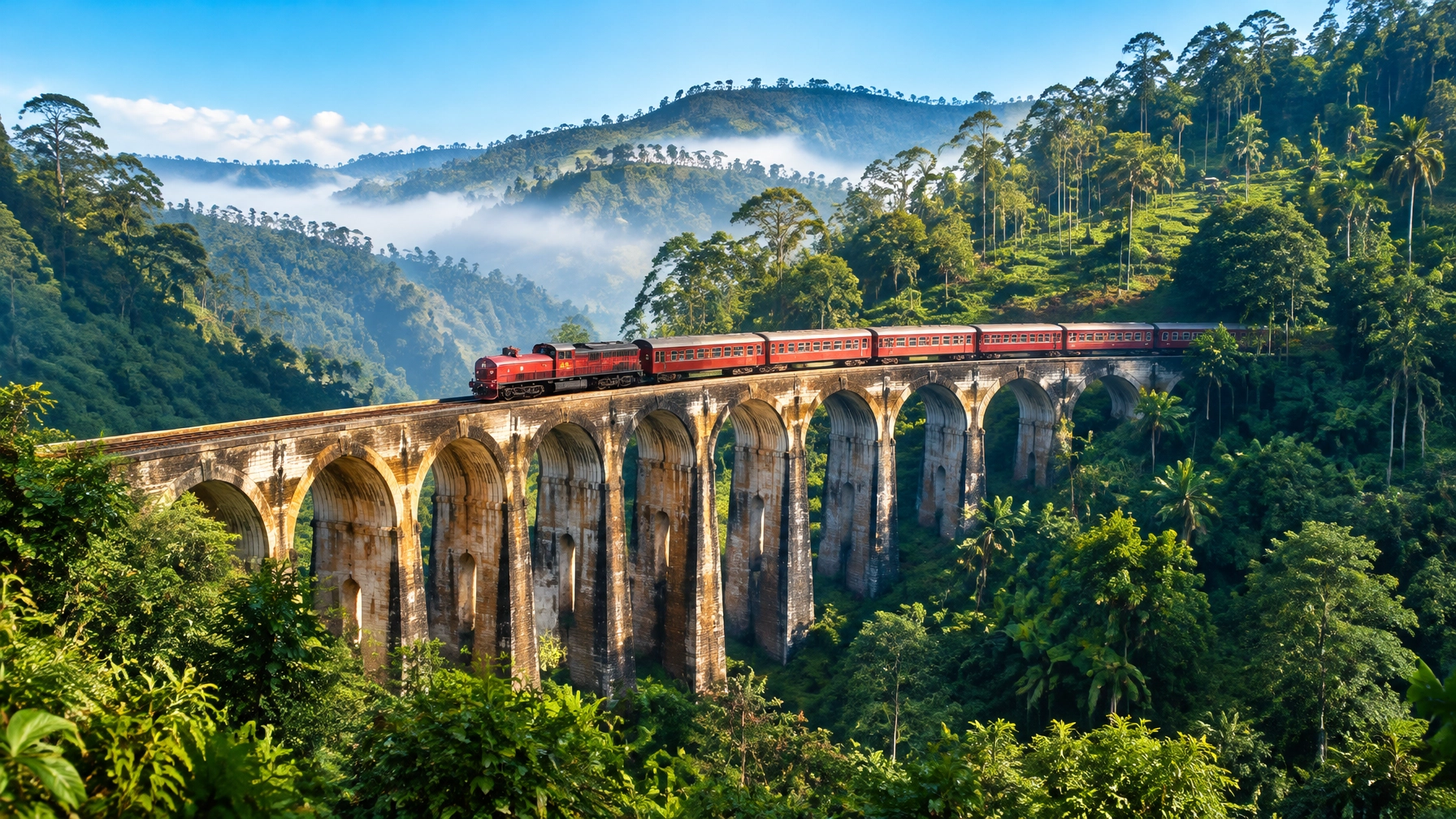
Then continue towards Ella, where the celebrated Nine Arch Bridge arches across a jungle valley. See it in bright morning light if you can, but don’t step onto the tracks or rely on a train arriving at a particular minute. Local conditions and services can change.
Ella’s viewpoints are worth the effort, with honest preparation. Little Adam’s Peak is the gentler walk; Ella Rock is longer and steeper, so allow time, wear shoes with grip and take water. Choose a working tea estate visit to understand the journey from fresh leaf to cup: plucking, withering, rolling, fermenting and firing. Ceylon black tea is fully oxidised; green tea is processed to limit oxidation, while delicate silver tips are carefully selected buds.
For a signature stay, look to a restored planter-era bungalow: perhaps with a log fire, a verandah and mist moving over the garden. It’s quiet luxury rooted in place. Keep road distances realistic too: Kandy to Ella by car can take three to four hours, and winding mountain roads make short distances slow.
Galle Fort, a UNESCO-listed historic town and fortification, is best explored on foot. Built up under Dutch rule, its stone ramparts meet the Indian Ocean, while restored merchant houses now hold boutiques, cafés and small hotels. Walk the walls at sunset towards the lighthouse and nearby mosque; then let the Fort’s calm lanes set the pace.

The shopping is genuinely good (linen, gems and antiques) so buy thoughtfully, check provenance and use reputable sellers, particularly for precious stones. Within the Fort, intimate boutique hotels are among Asia’s most atmospheric places to stay: historic texture, shaded courtyards and the sea close at hand.
Beyond the walls, choose your coastline. Unawatuna curls around a sheltered bay; Talpe and Koggala offer a quieter feel. The stilt fishermen are now largely part of a photographic tradition, if you take a picture, ask first and pay respectfully. Mirissa is a seasonal base for whale-watching, including possible blue-whale sightings roughly November to March, but sea conditions vary and sightings are never guaranteed. Weligama suits beginner surfers and lessons; Tangalle offers quieter stretches of sand.
For a wildlife adventure, Yala National Park is known for leopards, but popular safari blocks can feel busy at peak hours. Ask a knowledgeable guide about less-visited Block 5 or bird-rich Bundala if you prefer a quieter outing.
With more time, head north to Sigiriya, where an early start makes the climb up Lion Rock’s 1,200 steps more comfortable. Explore the cave temples at Dambulla, or cycle through the ancient city of Polonnaruwa. Minneriya and Kaudulla are famous for seasonal elephant gatherings, usually around July to September; in winter, elephants move between parks, so ask local guides where sightings are most likely.
The best meal may come from a small family-run eatery: rice and curry served with a generous range of vegetable dishes and sambols. Try hoppers or egg hoppers with sweet onion seeni sambol, and follow the unmistakable clang of blades to a busy kottu roti stall, where locals queue is often a good sign.
Cool down with roadside king coconut water; finish with curd and jaggery. Sri Lanka is the home of Ceylon cinnamon, true cinnamon rather than cassia. Spice levels vary, so simply ask for a milder plate if you prefer.
The Sri Lanka Tourism weather guide is worth checking as plans take shape. Conditions vary across the island, but this is a useful seasonal guide:
| Months | What to expect |
|---|---|
| December–March | The strongest window for warm, dry south-west beaches; coastal temperatures often reach 28–32°C. The hills are cooler. |
| November | A shoulder month, but showers and rougher seas are possible. Flexibility makes the difference. |
| April | Hotter and transitional, with the Sinhala-Tamil New Year bringing important local celebrations. |
| May–September | The south-west monsoon affects this route, while the east coast becomes the summer alternative. |
Direct flights from the UK to Colombo take roughly 10.5–11 hours, depending on the service. Entry rules can change: check the official ETA portal and UK government travel advice before booking, and apply only through official channels.
At temples, dress modestly and remove shoes and hats where requested. Never pose with your back to a Buddha statue for a photograph. Poya full-moon days can affect alcohol sales and opening hours, so check dates as you plan. Touts are present at some major sights; a polite, firm no is enough.
Carry Sri Lankan rupees for smaller vendors. Use bottled water, protect yourself from the sun, and check current travel-health advice on dengue and other mosquito-borne illnesses before departure. For train days, leave room for delays and keep your plans flexible.
A ten-night classic could look like this: Colombo 1 night, Kandy 2, hill country and a tea bungalow 3, Galle 2, then the coast 2. With twelve nights, add the cultural triangle or spend longer at Yala and the southern shore.
For winter 2026–27, book early if you have your heart set on a tea-country bungalow or one of Galle Fort’s most sought-after boutique hotels, particularly around Christmas and New Year. Reserved train seats, whale-watching trips and Yala safaris are also worth arranging ahead. Our team can tailor either itinerary, and we handle last-minute requests wherever availability allows.
For more destination inspiration, explore Raheem Tours. And when you see our Sri Lanka post on Instagram, comment CEYLON and we’ll send you the direct link by DM.
Sri Lanka stays with you in contrasts: temple bells in the morning, tea-scented air in the hills, and the last light settling over the sea. Timeless travel, whenever wherever.