





 Raheem Tours
22 November 2026
Raheem Tours
22 November 2026
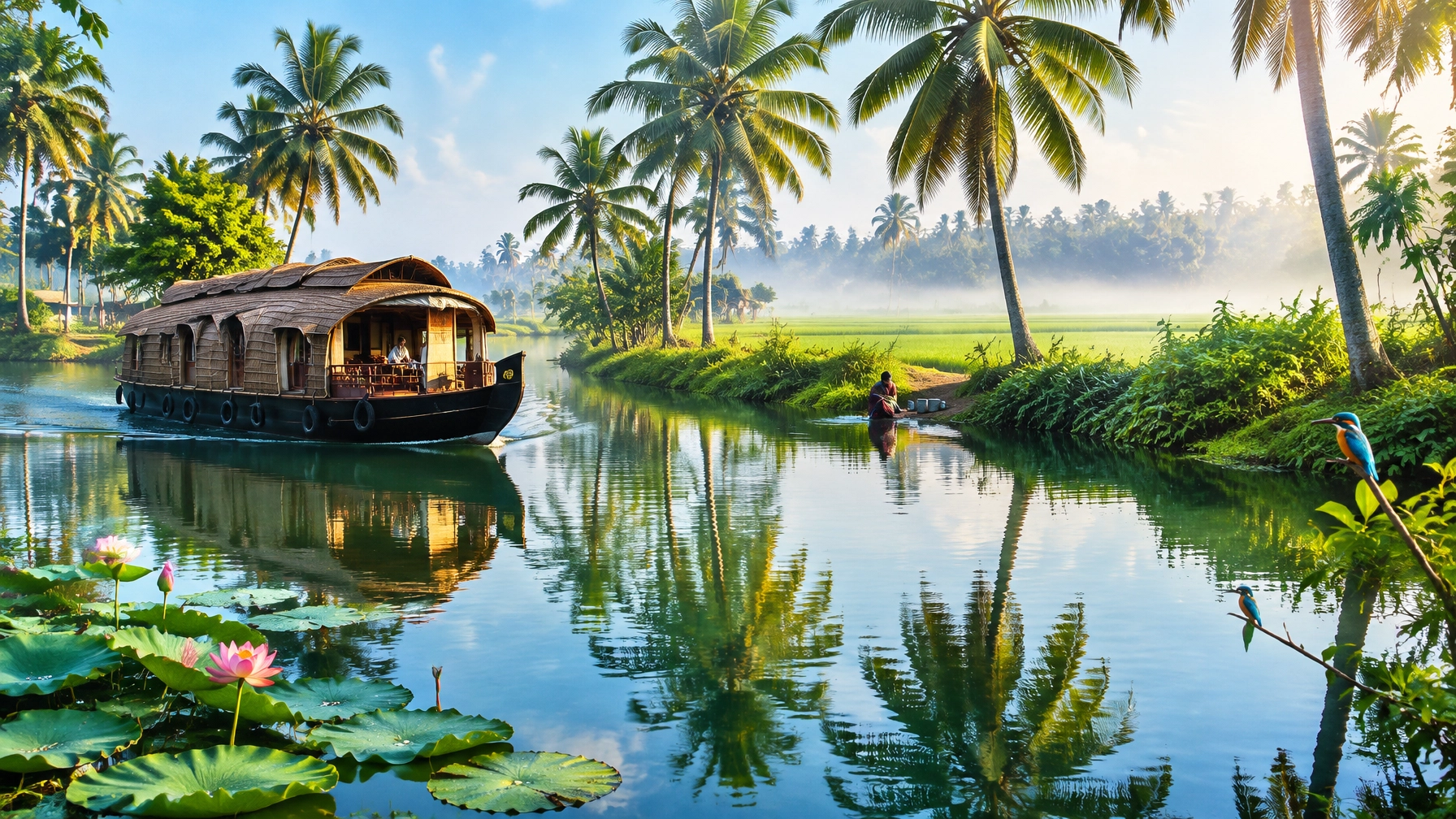
India at its gentlest, and a journey that invites you to slow down.
Palm-lined canals, mist lifting from tea hills, the soft rhythm of a Kathakali drum: Kerala reveals a quieter side of Asia, where a few thoughtful stops can feel like a world of their own. For a first visit to India, it’s an especially welcoming introduction; for seasoned travellers, it’s a chance to linger beyond the familiar.
Our kind of Kerala journey is less about ticking off landmarks and more about choosing the right pace: a heritage stay in Kochi, an overnight on the backwaters, a cool morning among Munnar’s tea terraces, perhaps a few restorative days by the sea.
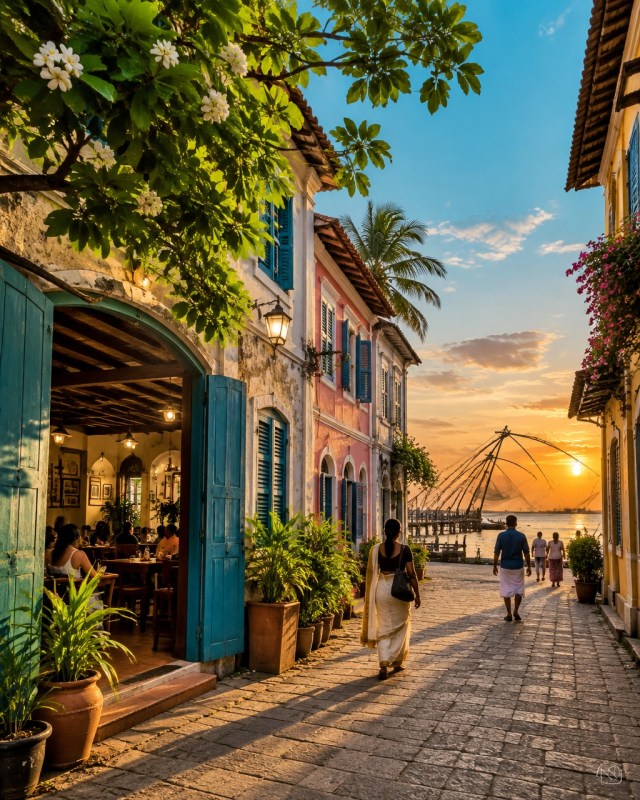
In Fort Kochi, the Chinese fishing nets make a graceful silhouette against the sunset. Nearby, Portuguese and Dutch-era streets unfold in pastel façades, shaded courtyards and cafés tucked into old godowns. Kochi is a city of textures rather than grand monuments. Its pleasures emerge as you wander.
Look for the murals at Mattancherry Palace, then explore Jew Town and the Paradesi Synagogue, observing local customs and any visitor guidance at religious sites. Kochi’s contemporary art spaces add another layer, particularly during the Kochi-Muziris Biennale, when the city’s historic buildings become galleries.
An evening Kathakali performance offers a vivid introduction to Kerala’s classical dance-drama. Arrive early if a makeup demonstration is offered; the transformation (layered colour, expressive eyes and elaborate costume) is part of the experience. During the performance, watch how precise hand gestures, or mudras, help tell the story. Keep phones discreet, follow the venue’s photography rules, and avoid flash.
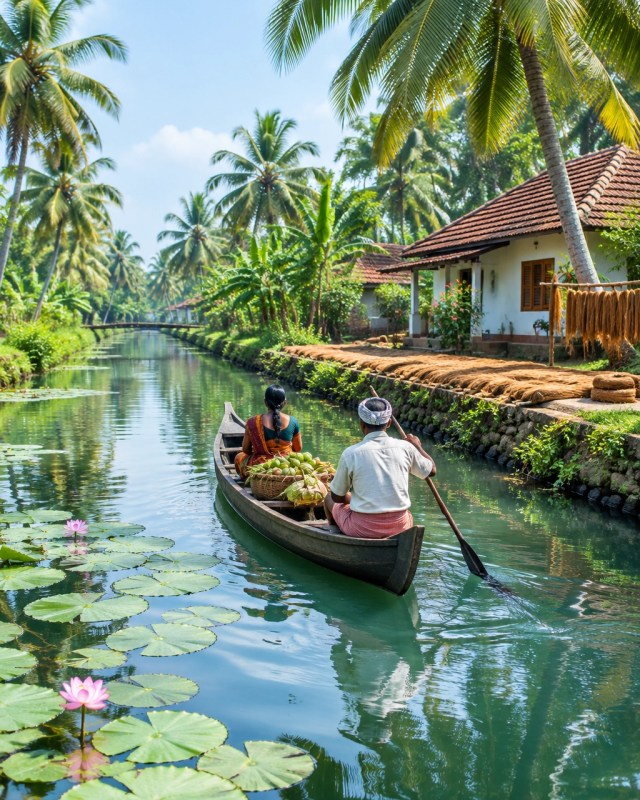
Alappuzha (Alleppey) is the classic houseboat gateway. A traditional kettuvallam, once a rice barge, now carries bedrooms, a shaded deck and a cook who prepares meals on board. Follow the canals through Kuttanad, where palms, paddy fields and village life give way to the broad shimmer of Vembanad Lake. An overnight aboard is the signature experience: evening light on the water, dinner made with local ingredients, then a stillness that feels a long way from home.
Choose your boat with care. A one-bedroom boutique conversion offers an intimate, unhurried stay; larger boats may suit families or groups but can feel livelier. Newer solar or electric boats can be a quieter, cleaner choice where available. Ask about the route, crew conditions, waste management and single-use plastics, and remember that the banks are people’s homes. Let village life unfold without intrusive photography.
For an even slower perspective, take a canoe or shikara into narrow canals that houseboats cannot enter. Village walks may bring you past toddy shops, coir-making and duck herds moving through the paddies. At Kumarakom, lakeside resorts offer a gentle base, while the bird sanctuary is especially rewarding for migratory birds from November to March.
At around 1,600 metres, Munnar trades tropical warmth for cool air and tea-covered slopes. The terraces form soft green geometry across the hills; the Tata Tea Museum gives context to the region’s tea-making history, while Top Station opens onto expansive mountain views when the skies are clear.
Eravikulam National Park is known for the Nilgiri tahr. The park generally closes for part of the calving season (often around February and March, sometimes into early April) so check its official visitor information before planning your visit. Munnar can be genuinely cool and misty, even when the coast is warm; pack layers and leave room for changing weather.

Beyond Munnar, Thekkady and Periyar bring spice plantations, forest walks and bamboo rafting into the picture. If you’re considering an elephant programme, choose observation-only experiences that prioritise animal welfare, never riding. For a longer trip, Wayanad adds forest landscapes and the remarkable Edakkal Caves. The hills and coast feel like two different climates, so plan transfers with time to spare.
Kerala is the home of Ayurveda, a living tradition, not simply a spa menu. A genuine programme typically begins with a consultation about your health and constitution, or dosha, with treatments prescribed by a practitioner rather than selected like add-ons. Panchakarma is a deeper, supervised therapeutic protocol, not a quick wellness treatment.
Credible Ayurvedic hospitals and heritage retreats exist alongside lighter spa-Ayurveda offerings. If you want a substantial programme, allow several nights to two weeks, check the practitioners’ qualifications and speak with your doctor before treatment, especially if you take medication or have an existing health condition. Kerala’s established options can be excellent, but a thoughtful consultation matters more than a promising brochure.
Kovalam centres on Lighthouse Beach, with quieter neighbouring coves for a softer pace. In Varkala, a cliff-top path looks over an arc of sand; nearby Papanasam beach holds religious significance, so be respectful of worshippers and local customs. Marari is the backwaters’ coastal twin. A calm stretch near a fishing village, ideal for an unhurried few days.
Kerala’s beaches are beautiful, but swimming conditions vary with currents and season. Pay attention to flags and local advice, and don’t assume a calm-looking sea is safe.

Kerala’s cuisine is one of India’s great vegetarian-friendly traditions. A sadya is served on a banana leaf, with the rice and accompaniments arranged around it; customs vary, but a traditional meal may move from parippu and ghee to sambar, then rasam and curd or buttermilk, with payasam to finish. Follow your host’s lead and enjoy the rhythm of the meal.
Try soft appam with stew, fish moilee scented with coconut, and puttu with kadala. In the highlands, Syrian Christian beef ularthiyathu is a beloved speciality. Banana chips fried at the roadside make a fine snack; toddy, or palm wine, is a local pour where licensed. Kerala food is often coconut-rich and gentler on chilli than many expect, but always ask about spice levels.
The classic window is October to March. November to February generally brings comfortable weather and is popular for both backwaters and hill stations. December and January are peak season, with the best-loved stays and highest prices. September and April can be quieter shoulder months. The June-to-August monsoon is dramatic and very green; it’s also traditionally associated with Ayurveda, but expect heavy rain and possible travel disruption.
From the UK, journey times to Kochi are around 10–11 hours on direct services where available; schedules change, and many travellers connect through Gulf hubs. Thiruvananthapuram (Trivandrum) is another useful gateway for the south. British passport holders generally need a visa; check the latest GOV.UK India entry advice and apply only through the official Indian e-Visa portal. Rules can change.
Carry some rupees for markets and smaller vendors. Modest dress is appreciated away from beaches; remove shoes at temples. Alcohol is licensed in hotels and selected bars, with stricter rules than in many destinations. Modest tipping is appreciated, and autorickshaws and app-based taxis both operate. Choose bottled or filtered water, use sun protection, and check current travel-health advice before departure.
Seven-night slow core: Kochi for two nights, then an overnight houseboat and two nights near Marari, followed by two nights in Munnar.
Ten-night journey: Kochi, the backwaters and Marari, then Munnar and a night or two in Thekkady or Wayanad, finishing on the coast at Kovalam or Varkala. Road journeys can take longer than the map suggests, so allow time between regions.
The boutique houseboats, heritage Ayurveda retreats and Munnar rooms with the best views often sell out first for December, January and the Christmas–New Year period. We can tailor either itinerary around your pace, preferred hotel style and travel dates, and we handle last-minute requests where availability remains. Discover more destination inspiration with Raheem Tours or talk to our team.
For more Kerala hidden gems, cultural inspiration and things to do, save this guide for your bucket list. When we share it on Instagram, comment BACKWATERS and we’ll DM you the direct link.
Timeless travel, whenever wherever.