





 Raheem Tours
25 November 2026
Raheem Tours
25 November 2026
Colombia is a country of beautiful contrasts: Caribbean streets warmed by the sun, cool Andean evenings, coffee farms folded into green mountains. For UK travellers looking beyond the familiar, this is a compelling South America discovery, and a natural next chapter after the vast landscapes of Patagonia.
Pair Cartagena’s walled old city with the Coffee Triangle, or Eje Cafetero, and you move from ochre stone and bougainvillea to cloud forest and the world’s tallest palms. You don’t just visit. You live the contrast, with time for local stories, restorative stays and a little room to wander.
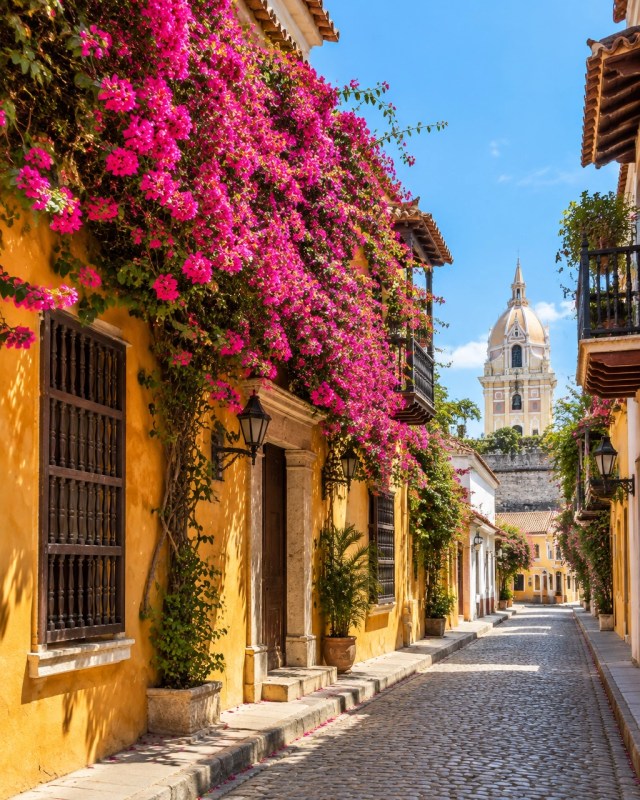
UNESCO-listed Cartagena is a city best met at a gentle pace. Its historic centre is enclosed by around 11 kilometres of walls, with the San Diego and Centro barrios revealing flower-draped balconies, shaded plazas and handsome colonial façades at every turn.
Begin early, before the day’s heat gathers. Wander from Plaza Santo Domingo to the Cathedral and the Palacio de la Inquisición, then follow the lanes to Las Bóvedas, where craft stalls sit beneath the old fortifications. A private walking tour with a local historian can bring the city’s layered past into focus without turning its living streets into a lecture.
Across the walls, Getsemaní offers a different rhythm: vivid street art, cafés and the much-photographed umbrella street. Visit with curiosity and respect. If you’d like a portrait or photograph of a resident or street vendor, ask first.
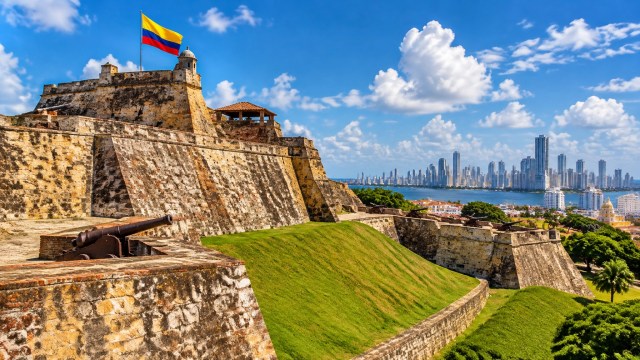
For a deeper look at the city’s fortifications and history, explore Cartagena’s walls and the historic centre. Continue to Castillo San Felipe de Barajas, where tunnels and ramparts offer a remarkable sense of the city’s scale.
Cartagena is hot and humid year-round, often above 30°C. Make the most of the cooler mornings and evenings, and leave space to rest at midday. At sunset, the walls glow amber. You might watch the sky change from Café del Mar, or choose a sunset sail on a classic schooner for a quieter view from the bay.
For a beach day, the nearby Islas del Rosario offer clear water and a welcome change of pace. Day boats vary in quality, though; a private or small-group charter can make the journey feel more considered, with less waiting and a better chance to settle into the day.
One of Cartagena’s signature luxury choices is a boutique hotel inside a restored colonial mansion: cool inner courtyards, leafy gardens and a plunge pool tucked away from the street. Rooftop pools bring another perspective, looking out over terracotta roofs and church domes.
We look for stays that feel beautifully placed but never too lively. A calm base matters after a day in the heat. Cartagena’s restaurant scene is genuinely world-class at the top end, including celebrated chef-led restaurants, while the city’s everyday flavours are just as memorable: ceviches, coconut rice (arroz con coco), fried mojarra and crisp patacones.
From the Caribbean, head inland to Caldas, Quindío and Risaralda, the heart of Colombia’s coffee country. The wider UNESCO-listed Coffee Cultural Landscape reflects generations of coffee-growing in the Andes; it’s a working landscape, not simply a collection of scenic viewpoints.
The prettiest bases are Salento and Filandia, where colourful balconied streets, small cafés and mountain views invite unhurried mornings. Choose a characterful finca stay or a peaceful rural lodge, then take a guided coffee tour that follows the journey from cherry to cup: picking, pulping, drying, roasting and tasting. We recommend choosing farms that treat their pickers fairly and welcome questions about how the work is done.

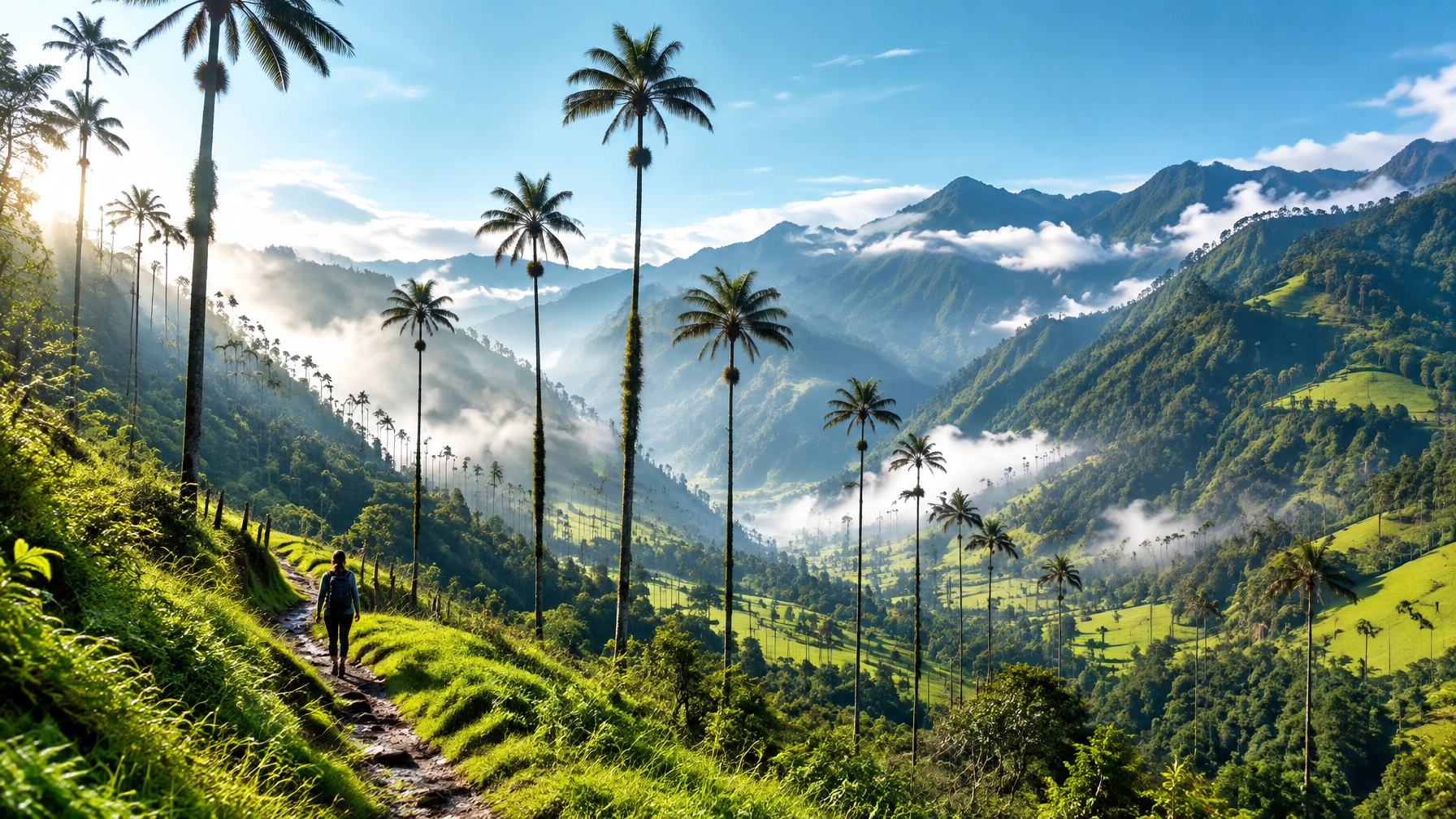
In Cocora Valley, slender wax palms rise from the grasslands and cloud forest. Colombia’s national tree, reaching up to 60 metres. The scale is astonishing. On the classic hike, trails wind through changing landscapes, with hummingbirds at the Acaime reserve adding a flash of colour among the trees.
Bring proper boots: the route can be muddy, steep in sections and slippery after rain. Take local advice on trail conditions, start early and give yourself time to enjoy the views rather than rushing for a photograph. The official Cocora Valley guide offers an introduction to the valley and its wax palms.
Coffee country rewards looking beyond the best-known trail, too. In Manizales, the cable car glides above the city; Santa Rosa de Cabal is known for its thermal springs, while the Guaduales botanical gardens and nearby countryside offer quieter green spaces. The region is among the world’s richest for birdwatching, and an experienced guide can help you notice the life moving through the canopy. Further south, Jardín makes a lovely, quieter alternative for travellers with extra time.
In the Triangle, a warm arepa with hogao is a simple pleasure; Medellín’s territory is famous for bandeja paisa, a generous plate best approached as hearty comfort food rather than a light lunch. And then there’s the coffee. A tinto is a small black cup, often enjoyed simply and socially; street vendors serve it throughout the day.
Try fresh juices made with lulo, maracuyá or guanábana. On the coast, the combination of coconut rice, fish and patacones brings the Caribbean to the table. Ask what’s local and in season, often the most memorable meal is the simplest one.
For the best month to travel, think in terms of rainfall and altitude rather than four neat seasons. Cartagena’s drier, breezier window is roughly December to April, while wetter weather is more likely from May to November; showers do not necessarily last all day. In the Coffee Triangle, temperatures stay spring-like at around 1,200–1,800 metres, but wetter periods often fall in April–May and October–November. Pack for both: light clothes for the coast, and a waterproof layer plus warmer clothes for mountain evenings.
Medellín is a practical and rewarding pause between the coast and coffee country. Known as the City of Eternal Spring, it generally enjoys mild temperatures around 22–25°C. Its Metrocable reveals sweeping views across the valley, while the botanical garden offers a gentler reset.
In Comuna 13, take a guided visit led by local residents and listen to the community’s own perspectives; respectful, community-led tours make all the difference. Medellín is also a useful airport hub for onward connections to Pereira or the Triangle.

From the UK, routes commonly connect through Madrid, Paris or Amsterdam before continuing to Bogotá. A flight to Bogotá takes roughly 10–11 hours once airborne; with connections and onward domestic flights to Cartagena and Medellín or Pereira, allow around 14–18 hours overall, depending on your itinerary.
British passport holders can generally visit for tourism without a visa for up to 90 days, subject to the immigration officer’s decision. Rules can change, so check the latest GOV.UK Colombia entry advice before booking. Colombia’s peso is the local currency: cards work in cities, while cash is useful in smaller towns. A little Spanish transforms the experience, from a market greeting to a longer conversation over coffee.
The main tourist routes are well travelled, but no destination calls for complacency. Read the FCDO’s current Colombia guidance for regional advice, use pre-booked transport, avoid isolated areas and stay street-smart in cities. In Bogotá, at 2,600 metres, you may feel breathless on arrival; take it gently. Modest tipping is appreciated, and a few Spanish phrases help you connect more naturally.
Nine nights makes a satisfying first pairing: three in Cartagena, including a Rosario Islands day; two in Medellín as the connector; and three in Salento or Filandia, with Cocora and a finca visit. With twelve nights, add Bogotá’s La Candelaria and the Gold Museum, or extend your coast stay towards Palomino’s beaches. We can tailor either route around your pace, preferred hotel style and flight connections. Explore our guides or Raheem Tours to start shaping your journey.
Courtyard mansions in Cartagena and the most sought-after finca stays in Salento often book first for December to April, especially over Christmas and New Year or Easter. If you’re planning late, we can still explore last-minute availability and suitable alternatives.
Colombia is not one landscape, one flavour or one way of travelling. It is a walled city at dusk, a cup of tinto, and wax palms emerging through the morning mist. Timeless travel, whenever wherever.
Planning Colombia? On our Instagram post, comment WAXPALMS and we’ll send you the direct blog link by DM.