

Timeless travel, whenever wherever.
The Northern Lights remain one of Europe’s ultimate bucket list experiences, but the Arctic is not one interchangeable destination. Tromsø, the Lofoten Islands, Finnish Lapland and Iceland each offer a different rhythm, landscape and style of adventure travel.
Aurora demand is rising, and Norway is following Iceland as one of the hottest tickets for winter escapes. The question is not simply where you might see the lights. It is where you will feel most at home while waiting for them.
Here is our guide to choosing the right Arctic base for 2027, from city comforts and fjord cruises to glass igloos, hidden fishing villages and first-class wilderness stays.
🌌 When is the best month to travel for the Northern Lights?
The main viewing window runs from September to March, with the aurora also possible from late August into early April when the sky is dark and clear.
For many travellers, the strongest balance comes in:
- Late September to October: longer daylight, milder temperatures, autumn colour and strong equinox activity.
- February to March: excellent snow, returning daylight, long dark evenings and another period of strong aurora activity.
- December to January: the deepest winter atmosphere and maximum darkness, particularly atmospheric in Lapland, though colder and busier around Christmas.
Aurora forecasts are useful, but they are never promises. The Kp index measures geomagnetic activity from 0 to 9, while cloud cover, darkness, local weather and light pollution determine whether you can actually see the display. Visit Tromsø and Visit Finland both emphasise the same essentials: clear skies, patience and several nights in the region.
🧭 Arctic bases compared
| Destination | Darkness per day* | Typical temperatures | Approx. UK flight time | Best for |
|---|---|---|---|---|
| Tromsø | 6–24 hours seasonally | Around -5°C to +5°C | 4–5 hours airborne via Oslo | Easy logistics, couples, families, guided tours |
| Lofoten Islands | 8–24 hours seasonally | Around -3°C to +5°C | 4.5–6 hours plus transfer | Photographers, independent travellers, quiet escapes |
| Finnish Lapland | 10–20 hours seasonally | Around -10°C to -25°C in deep winter | 3.5–4 hours direct charter | Families, glass igloos, huskies and reindeer |
| Iceland | 8–20 hours seasonally | Around -1°C to +5°C, with wind chill | 2.5–3 hours direct | Road trips, geothermal lagoons and dramatic landscapes |
*Approximate darkness varies by month and exact location. Polar night does not mean total blackness all day. Soft blue twilight often fills the hours around midday.
🇳🇴 Tromsø: the effortless Arctic classic
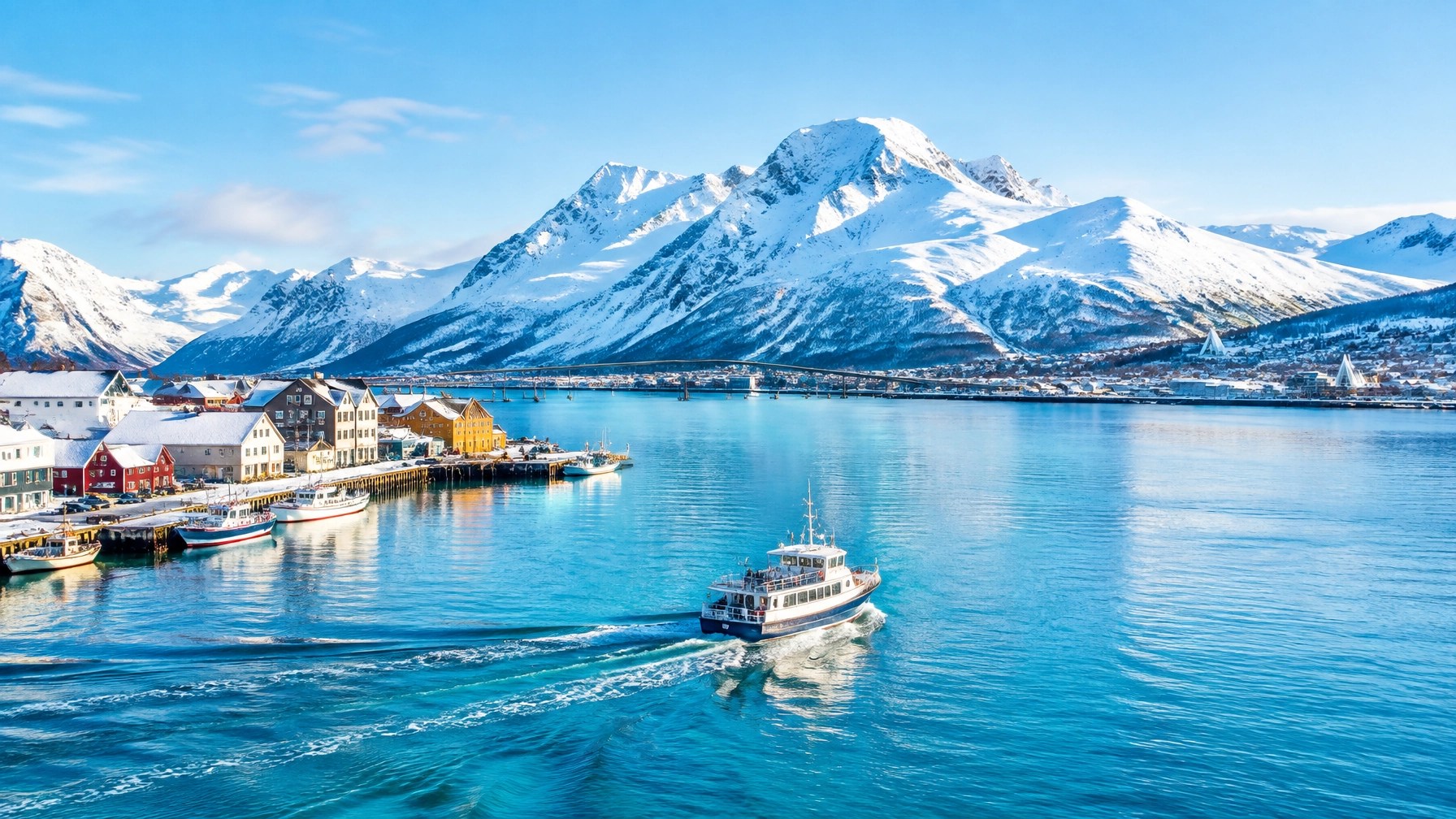
Tromsø is the most versatile choice. It gives you the convenience of a lively Arctic city, excellent local guides and immediate access to fjords, mountains and wilderness.
The aurora season generally runs from September to early April. In September and October, you can expect roughly 8–12 hours of daylight, while December and January bring polar night, with only a few hours of blue twilight. By February and March, daylight returns gradually, creating a beautiful balance between daytime exploration and dark evenings beneath the aurora.
Temperatures usually sit around -5°C to +5°C, although wind and time spent standing still can make it feel considerably colder.
From the UK, Tromsø typically involves a connection through Oslo, with around four to five hours of flying time, excluding the transfer. The logistics are straightforward, and airport-to-hotel transfers are easy to arrange. An advantage when arriving with winter luggage.
Choose Tromsø if you want:
- Excellent guides who monitor cloud cover and adapt the evening route.
- Fjord cruises, whale watching, dog sledding and snowshoe walks.
- A choice of restaurants, cafés and comfortable hotels.
- Private tours and small groups rather than large coach excursions.
- A base that works well for couples, families and solo travellers.
The city itself can feel busy during Christmas and New Year, but the wider region offers quieter choices in Kvaløya, Sommarøy, Lyngen and Senja. These are ideal for a beautiful but never too lively stay, with lodge-style accommodation, private guides and wilderness views beyond the city glow.
For more context on the region, see Visit Tromsø’s Northern Lights guide.
🏔️ Lofoten Islands: Norway’s dramatic hidden gem
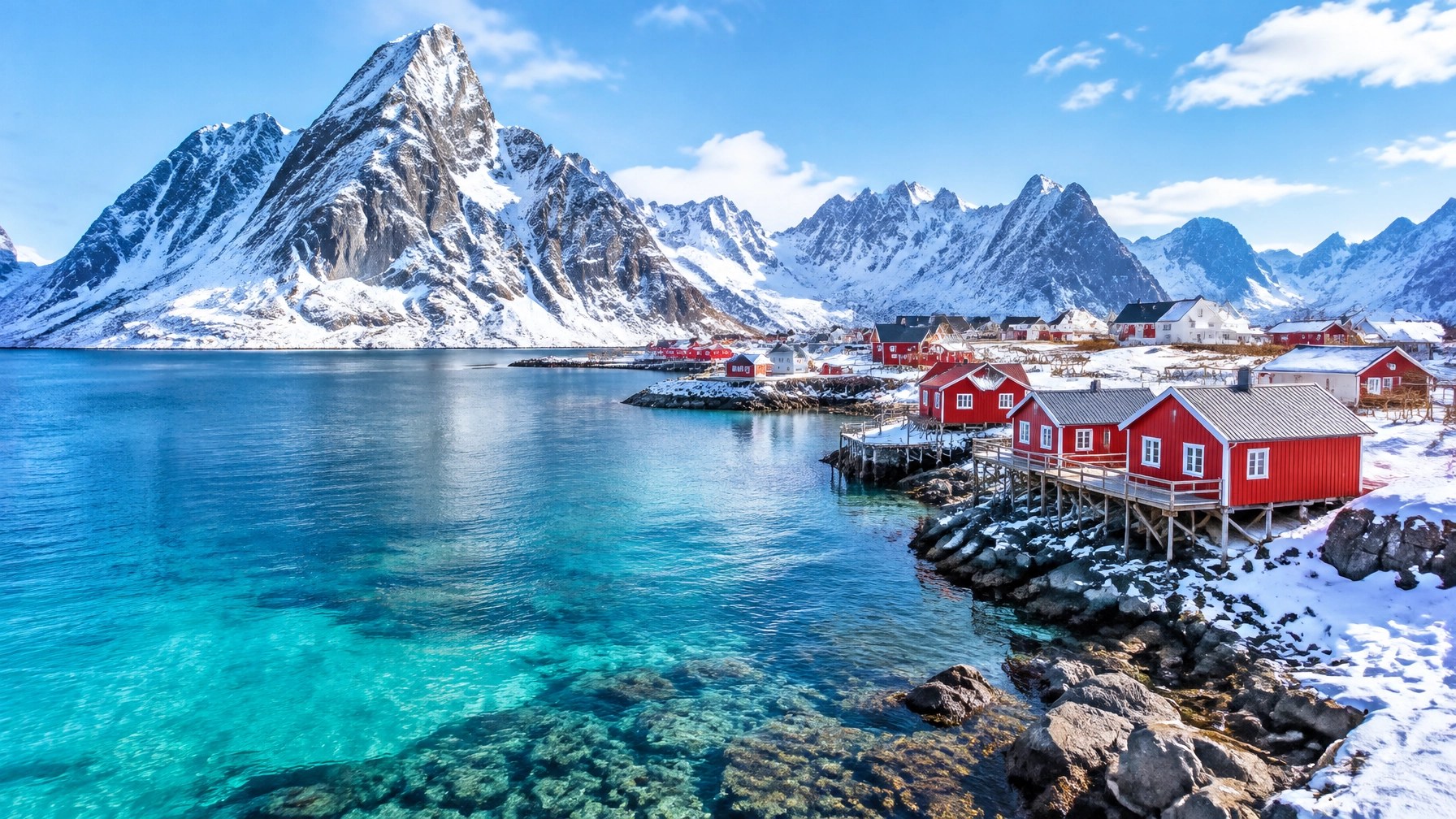
The Lofoten Islands are for travellers who want the Arctic to feel cinematic. Jagged peaks rise directly from the sea, red rorbuer cabins sit beside fishing harbours, and every bend in the road seems to reveal another extraordinary viewpoint.
Aurora visibility follows a similar September–March window, with September to October and February to March often providing the most rewarding mix of darkness and clearer daytime conditions. Expect approximately 8–12 hours of daylight in early autumn, near-polar darkness around midwinter, and longer daylight again by March.
The coastal climate is milder than inland Finland, with typical temperatures around -3°C to +5°C, but wind, rain and rapidly changing conditions are part of the landscape.
Travel from the UK usually involves flying to Bodø or Evenes, followed by a domestic connection, ferry or overland transfer. Allow approximately 4.5–6 hours of flying time, plus the final journey to your chosen village.
Lofoten suits:
- Photographers seeking dramatic foregrounds and low-light landscapes.
- Independent travellers who enjoy scenic drives and flexible days.
- Couples looking for secluded cabins, saunas and sea views.
- Solo travellers who prefer a slower, more reflective atmosphere.
It is quieter than Tromsø and far more spread out, but that is precisely the appeal. Stay near Reine, Hamnøy, Henningsvær or Svolvær, depending on whether you prefer solitude or easier access to restaurants and excursions.
Lofoten is less about ticking off activities and more about inhabiting the landscape: sea air, snow-covered peaks, harbour lights and the possibility of an aurora arching above the water.
🦌 Finnish Lapland: the family-friendly winter wonderland
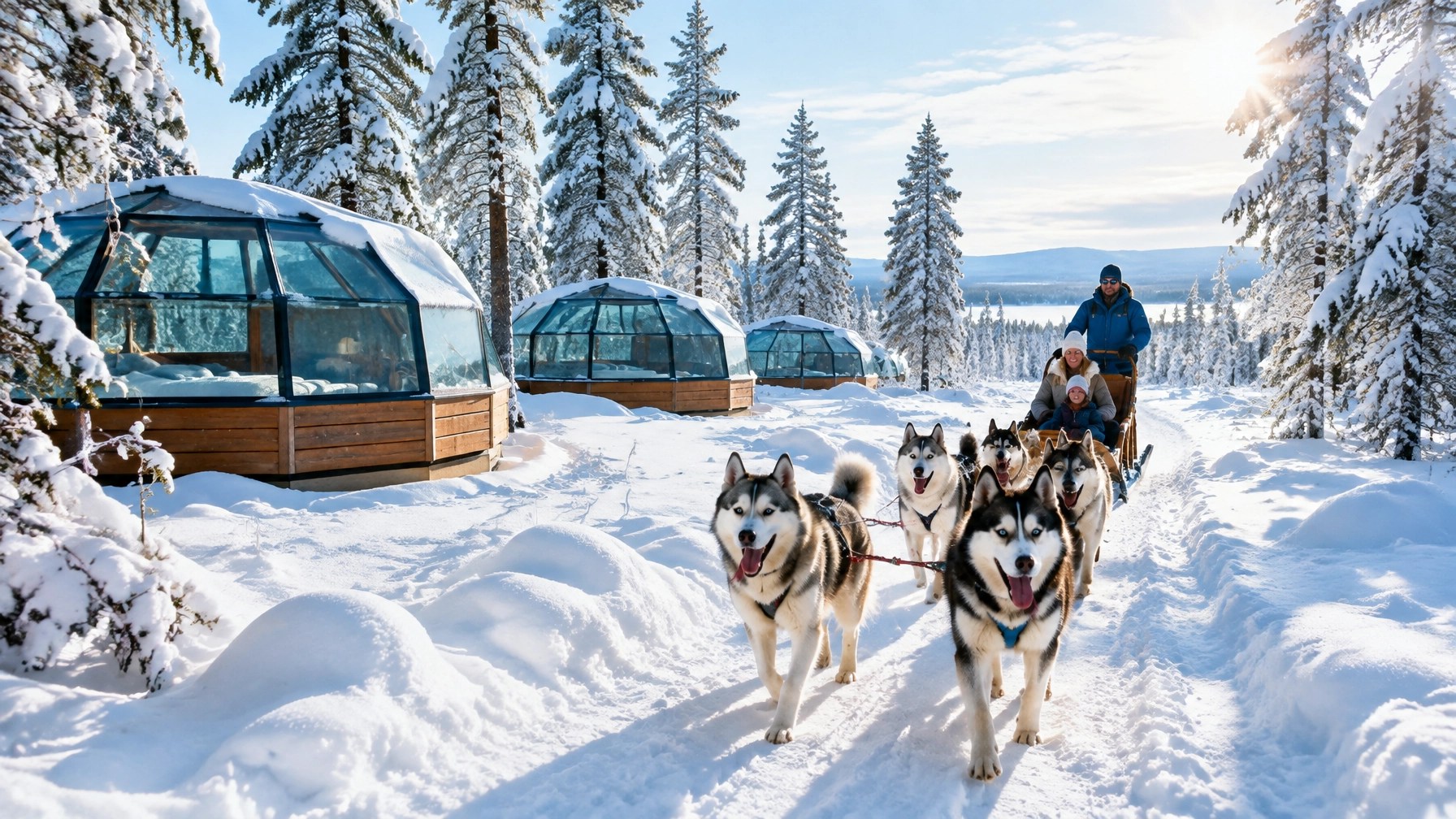
For families and travellers drawn to the classic Arctic experience, Finnish Lapland is the most complete winter package.
The region includes Rovaniemi, Levi, Saariselkä, Inari and Ylläs, each with a slightly different character. Rovaniemi offers Santa appeal, family facilities and easy access. Levi combines skiing with stylish accommodation. Saariselkä and Inari feel more remote, with darker skies and a stronger wilderness atmosphere.
The aurora season runs from late August to early April, with September–October and February–March widely regarded as excellent periods. In December and January, the far north experiences polar night or near-polar-night conditions, while February and March bring crisp snow, clearer daytime light and long evenings.
Temperatures vary considerably. Shoulder-season nights may sit around -5°C to +5°C, while December to February can fall between -10°C and -25°C, particularly around Saariselkä and Inari.
Rovaniemi can be reached by direct seasonal UK charter in around 3.5–4 hours. Scheduled routes via Helsinki generally take longer.
Choose Lapland for:
- Glass igloos and heated aurora cabins.
- Husky safaris, reindeer encounters and snowmobile excursions.
- Family villas with space to relax after outdoor activities.
- Saunas, fireside dining and snow-dusted forests.
- Quiet luxury properties away from the busiest resort centres.
Christmas week and New Year are especially popular, so this is where early planning matters most. If you prefer a calmer experience with excellent snow and fewer crowds, February and March are often the more refined luxury choices.
🇮🇸 Iceland: the spectacular full-country adventure
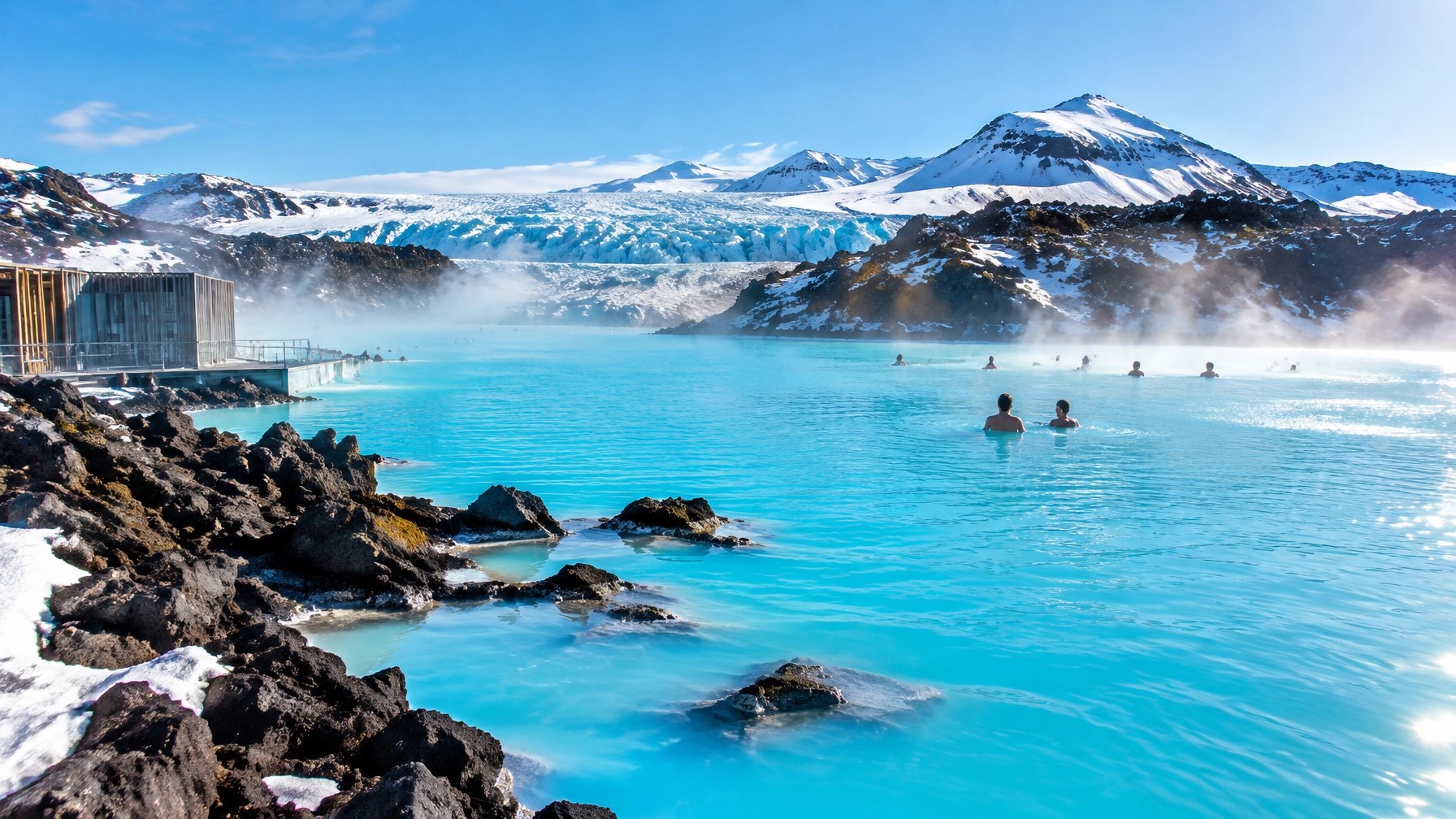
Iceland is different from the other three choices. It is less about staying in one Arctic base and more about building a complete journey around the country’s elemental landscapes.
The Northern Lights are generally visible from early September to early April, with late September to November and February to March offering especially good conditions. Winter daylight can range from around 4–5 hours in December and January to 7–11 hours by February and March.
Temperatures are usually milder than inland Lapland, often around -1°C to +5°C, but Iceland’s wind can make the cold feel sharper. Weather changes quickly, and road conditions require care.
Direct flights from the UK to Keflavík normally take approximately 2.5–3 hours.
Iceland suits:
- Couples combining aurora evenings with geothermal lagoons.
- Independent travellers and photographers.
- Adventure seekers drawn to glaciers, waterfalls and black-sand beaches.
- Travellers who want a road trip rather than a single resort.
- Those who enjoy boutique countryside hotels and design-led stays.
The best approach is to spend several nights outside Reykjavík, perhaps along the South Coast or Southeast Iceland, where dark skies, glaciers and lagoons create unforgettable daytime scenery. Guide to Iceland’s aurora guide is useful for understanding regional weather and clear-sky planning.
🔭 How aurora chasing actually works
A good aurora evening is not a scheduled performance. Local guides watch:
- Cloud cover: clear skies are essential.
- Geomagnetic activity: the Kp index indicates potential strength.
- The auroral oval: your guide tracks where activity is moving.
- Light pollution and local terrain: darker, open locations reveal more.
- Short-term weather changes: conditions can shift within an hour.
This is why a knowledgeable private guide or small group can make such a difference. In Tromsø, you may drive towards clearer skies. In Iceland, you may adjust the route along the coast. In Lapland, your lodge may have a wake-up service and a dark forest setting ready outside.
Sightings are never guaranteed. That is not a weakness: it is part of the wonder. Build your holiday around the full Arctic experience: husky trails, reindeer, fjord cruises, saunas, whale watching, snowshoe walks, geothermal bathing and quiet meals beside the fire.
🧤 What to pack for the Arctic
Use a three-layer system:
- Thermal base layer: merino wool or technical fabric, never cotton.
- Insulating middle layer: fleece, wool or lightweight down.
- Windproof outer layer: waterproof jacket and trousers.
- Insulated boots: roomy enough for warm socks, with strong grip.
- Mittens, hat and neck warmer: essential when waiting outdoors.
- Hand warmers and a power bank: especially useful for cameras and phones.
- Tripod and spare batteries: batteries drain quickly in freezing conditions.
Many husky and snowmobile operators provide thermal suits and winter boots, but you will still want warm personal layers for evenings outdoors.
📅 Booking your 2027 Northern Lights escape
For Christmas week, New Year, glass igloos, family villas and popular husky slots, aim to book nine to twelve months ahead. The most sought-after wilderness lodges and private guides disappear first.
For February and March, availability is usually more flexible, but the most beautiful and secluded properties still reward early planning. At Raheem Tours, we can also help when plans come together later. Our fast, effective and reliable service is designed to handle last-minute bookings successfully, subject to availability.
We look beyond the obvious resort centre to find hotels that are beautiful but never too lively, with amazing food options, carefully chosen excursions and upgraded transfers where available, particularly for remote airport-to-lodge journeys.
If you are planning your own 2027 adventure travel story, visit Raheem Tours or explore our travel blog for more destination guides.
✨ Our verdict
- Choose Tromsø for the easiest all-round Arctic escape.
- Choose Lofoten for dramatic scenery, quiet villages and photography.
- Choose Finnish Lapland for families, glass igloos and classic winter activities.
- Choose Iceland for geothermal lagoons, glaciers and a complete road-trip adventure.
For Instagram, comment AURORA on our Northern Lights post and we will send you the direct blog link by DM.
Timeless travel, whenever wherever.


