

🌤️ Oman is the Gulf at a gentler pace: whitewashed low-rise buildings beneath rugged mountains, turquoise water beyond the corniche, and evenings that invite you to linger over dinner rather than hurry on. It feels spacious and quietly assured: a place where the landscape, hospitality and history take centre stage.
For most of the country, November to March is the sweet spot. Days in Muscat are often around 24–28°C, while evenings, and mountain and desert nights, can feel cool. The small, beautifully placed stays that make Oman special are limited in number, so winter is worth planning ahead for. And if your dates are close, our team can also help with last-minute requests.
🕌 Muscat: white stone, sea air and lantern-lit souqs
Begin at Sultan Qaboos Grand Mosque, where the vast prayer hall holds a monumental hand-woven carpet beneath a dazzling Swarovski crystal chandelier. Non-Muslim visitors are generally welcomed Saturday to Thursday, 8:00–11:00 am; Friday access is closed to non-Muslim visitors. Check the official visitor information before you go, as arrangements can change.
Dress modestly, covering shoulders and knees; women should cover their hair. Remove your shoes before entering the prayer hall, keep your voice low and follow staff guidance. It’s an active place of worship, not simply a beautiful interior: arrive with respect, and leave room for people coming to pray.
At Mutrah Souq, the scent of frankincense drifts between stalls of silver, textiles and spices. Step back outside to the Mutrah Corniche, where the harbour glows at sunset and families stroll beside the water. The Royal Opera House offers a different kind of evening, while Old Muscat’s whitewashed buildings, Al Alam Palace and the Portuguese-era Mirani and Jalali forts reveal the city’s layered past from outside.
For a swim or a slower afternoon, head to Qurum Beach and the Shatti Al Qurum strip, with its cafés, hotels and restaurants. Muscat is a capital, but it never has to feel hurried.
⛰️ The mountains: cool air and canyon-edge stays
On **Jebel Akhdar, the Green Mountain, **the air cools as the road climbs towards the Saiq Plateau. Stone villages and terraced orchards cling to the slopes above deep canyon views. In spring, roses fill the terraces; the harvest and rose-water distilling are usually around March and April, with exact timing varying year to year. Wakan, a terraced mountain village in the wider Al Hajar range, makes a memorable addition for those exploring the interior.
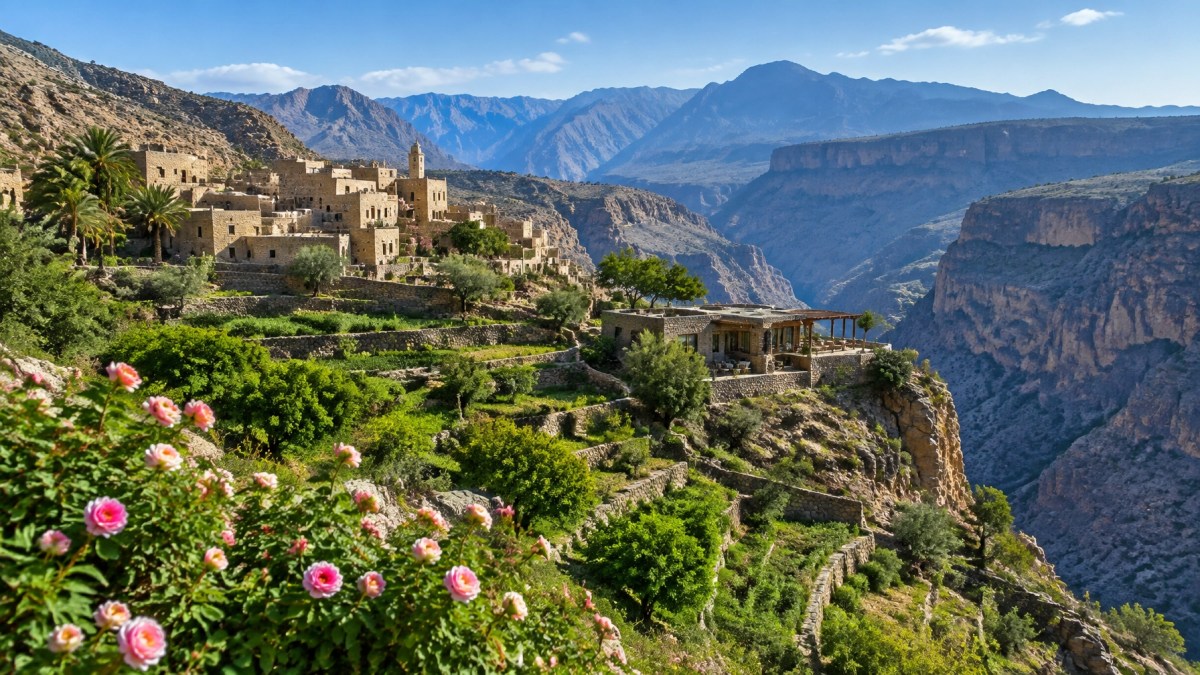
Stay in a small canyon-view lodge and let the scenery do what grand hotel lobbies cannot. Many of the region’s most appealing properties are intimate and thoughtfully placed. beautiful but never too lively.
For walks, choose a route that matches your fitness and check local conditions before setting out. Take more water than you think you’ll need, wear proper walking shoes and avoid the hottest part of the day. A four-wheel-drive vehicle is genuinely required for the ascent to Jebel Akhdar; alternatively, arrange a guided excursion or private driver-guide.
🐬 Musandam: fjord-like inlets and dhow days
In the far north, the Musandam Peninsula feels like another Oman: dramatic mountains drop into calm, fjord-like inlets known as khors. From Khasab, a traditional dhow cruise can bring you close to remote villages, clear swimming spots and, with luck, dolphins. Some trips offer overnight dhow camping beneath a sky bright with stars.
Musandam is separated from the Muscat circuit by the UAE, so it works best as a considered extension, not a quick detour. You can approach it via the UAE border, but check current entry requirements and confirm border, vehicle and insurance permissions before travelling overland. For a contrast trip, pair it with Dubai or Abu Dhabi.
🐪 Wahiba Sands: one night that stays with you
The Wahiba Sands, also known as Sharqiya Sands, are the classic desert chapter: ochre dunes, camel rides, sunset light and a night sky that seems to widen after dark. Look for a small, Bedouin-hosted camp with a limited number of tents and a thoughtful connection to local culture, rather than a vast resort-style setup.

Dune driving is best left to experienced drivers or your camp’s transfer team. Ask how your stay is hosted and what is included; then give yourself time to sit quietly as the dunes change colour. Of all the experiences in Oman, a night in the desert is often the memory that outlasts the itinerary.
🌊 Coast roads, wadis and the dhow builders of Sur
South of Muscat, Quriyat begins a scenic coastal journey towards the Bimmah Sinkhole, the turquoise pools of Wadi Shab, Fins Beach and Sur. At Wadi Shab, expect a hike over uneven ground, a boat crossing and, if conditions allow, a swim through the canyon towards a hidden grotto. It’s beautiful, but not effortless. Allow several hours, wear sturdy shoes, bring water and a dry bag, and check weather and local advice before you go. Never enter a wadi when flooding is possible.

In Sur, traditional dhow-building yards speak to the town’s seafaring heritage. Nearby Ras Al Jinz is known for green turtle nesting and guided, respectful viewing that protects the animals and their habitat. Turtles may be seen at different times of year, with nesting activity often peaking in summer; sightings are never guaranteed.
🏰 Nizwa and the interior: forts, falaj and Friday mornings
Inland, Nizwa’s great round fort rises above the old souq. If you can, time your visit for the Friday goat market, when trading brings a distinct energy to the morning. Check the schedule locally, then continue to Bahla Fort and Jabrin Castle for a deeper sense of Oman’s history.
Across the interior, date palms and lime plantations flourish around ancient falaj irrigation systems. A UNESCO-recognised tradition of water management. Here, history is not sealed behind glass; it continues to shape everyday life.
🌿 Salalah: a different season, a different Oman
There’s an important seasonal twist. Salalah and Dhofar are summer destinations, not winter ones. During the khareef, roughly June to September, monsoon mists turn the hills green and draw visitors from across the Gulf. Explore the frankincense heritage of the UNESCO-listed Land of Frankincense, watch the sea surge at Mughsail Beach’s blowholes, and see a side of the region many UK travellers have never encountered.
In winter, Salalah is drier and offers its own appeal, but for the famous green landscape, plan a separate khareef trip. Pair it with Muscat for the full arc of Oman, while allowing time for the distance between them.
✈️ When to go, and what to know
For Muscat, the mountains, desert and most coastal routes, October to April is generally the most comfortable season. November to March brings warm days in the capital and cooler evenings; pack a light layer for mountain and desert nights. The Jebel Akhdar rose season usually arrives around March and April. For Salalah’s khareef, choose June to September instead.
Flights from the UK are usually around seven hours direct, or longer with a connection via the Gulf. British passport holders may visit visa-free for up to 14 days subject to the current conditions; longer stays may require an e-visa. Entry rules can change, so check GOV.UK’s Oman entry guidance before booking. Our team can help you work through the practicalities.
Oman is one of the Gulf’s more rewarding self-drive destinations, but a 4WD is needed for Jebel Akhdar and some desert or wadi routes. A guided tour or private driver-guide can make those days easier. The currency is the Omani rial (OMR); cards are widely useful in hotels and larger businesses, while cash can help in souqs and smaller villages. Expect a range of costs: local cafés and simple stays can be good value, while intimate luxury lodges and private experiences are a more considered investment.
Dress modestly beyond beaches and resort pools, ask before photographing people, especially women, and keep affection discreet in public. Alcohol is generally limited to licensed hotel venues. Friday prayer and daily prayer times can affect opening hours, so check ahead. If you travel during Ramadān, dates vary each year; daytime dining options may be reduced, but the evenings offer a rewarding opportunity to experience the season’s hospitality with sensitivity.
🛎️ Quiet luxury, planned around you
Oman’s strength is not a row of enormous resorts. It’s a handful of exceptional places: canyon-edge lodges on Jebel Akhdar, intimate desert camps, historic boutique houses in Old Muscat. That feeling of being beautifully placed, but never swept into a crowd, is native to the country.
The most distinctive stays, and private desert or dhow overnights, have limited availability and often book first for November to March. Plan early if you have your heart set on a particular property; if your dates are closer, we’re experienced in handling last-minute requests. Where available, upgraded transfers and private driver-guides can make the journey feel seamless from the moment you arrive.
Explore our tour options and tell us what calls to you: Muscat and the coast, mountains and desert, or Oman paired with the UAE. Comment “OMAN” on our Instagram post and we’ll send you the direct link to this guide by DM.
Timeless travel, whenever wherever.
