

New Year can be more than a countdown. Across the world, it is a doorway into something older: a blessing, a shared meal, a shrine visit, a fire, a plunge into cold water or a wish carried into the months ahead.
From Edinburgh’s Hogmanay to Japan’s quiet hatsumode, these are cultural rituals rather than simple parties. You do not just visit. You take time to understand, observe and, where appropriate, participate with care.
For our festivals & events tours, the most meaningful journeys often begin with one question: What does this celebration mean to the people who live it?
🔥 Hogmanay in Edinburgh: Fire, Friendship and First-Footing
On 31 December, Edinburgh becomes a city of torchlight, music and winter anticipation. The modern Hogmanay programme is internationally famous, but its deeper roots lie in older Scottish midwinter customs: welcoming the New Year with warmth, good fortune and company.
Scotland historically placed greater emphasis on Hogmanay than Christmas. After the Reformation, Christmas was discouraged and, for centuries, was not treated as a major public holiday in the way it was elsewhere. Hogmanay therefore became the great winter gathering: a time for food, drink, visiting and ritual.
The Torchlight Procession, usually moving from The Meadows through the Old Town towards Edinburgh Castle, is the most atmospheric beginning. Thousands of flames create a river of light through stone streets and closes: cinematic, windswept and unmistakably Scottish.
At midnight, first-footing begins. Traditionally, the first person to cross a household’s threshold after midnight brings luck for the coming year. A tall, dark-haired man was once considered especially fortunate, while traditional gifts included coal for warmth, shortbread or black bun for abundance, and whisky for good cheer.
As a visitor, first-footing is something to experience through local invitation, never by turning up unannounced at a stranger’s home. If welcomed, bring a small gift, follow the household’s lead and treat the tradition as hospitality rather than entertainment.
New Year’s Day brings the Loony Dook, a costumed plunge into cold water near the Forth. The event began informally in the 1980s and has become one of Scotland’s most memorable things to do, although you should check whether the official swim is taking place in the year you travel. Warm layers, waterproof footwear and a safe return plan are essential.
Best place to stay: a heritage hotel within walking distance of the Old Town, but on a quieter street where sleep is still possible after midnight.
Best for: groups, couples and families with older children. The main procession is busy, so younger families may prefer a quieter viewing point and an organised daytime programme.
Plan ahead: four to six months at minimum. Edinburgh accommodation, rail travel and event access become highly sought after.
Explore Raheem Tours’ Scotland destination guide for inspiration beyond the city, or extend the celebration with a few peaceful days in the Highlands.
⛩️ Hatsumode in Japan: Beginning the Year with Intention
In Japan, New Year is not primarily a party occasion. It is a time for family, reflection and renewal.
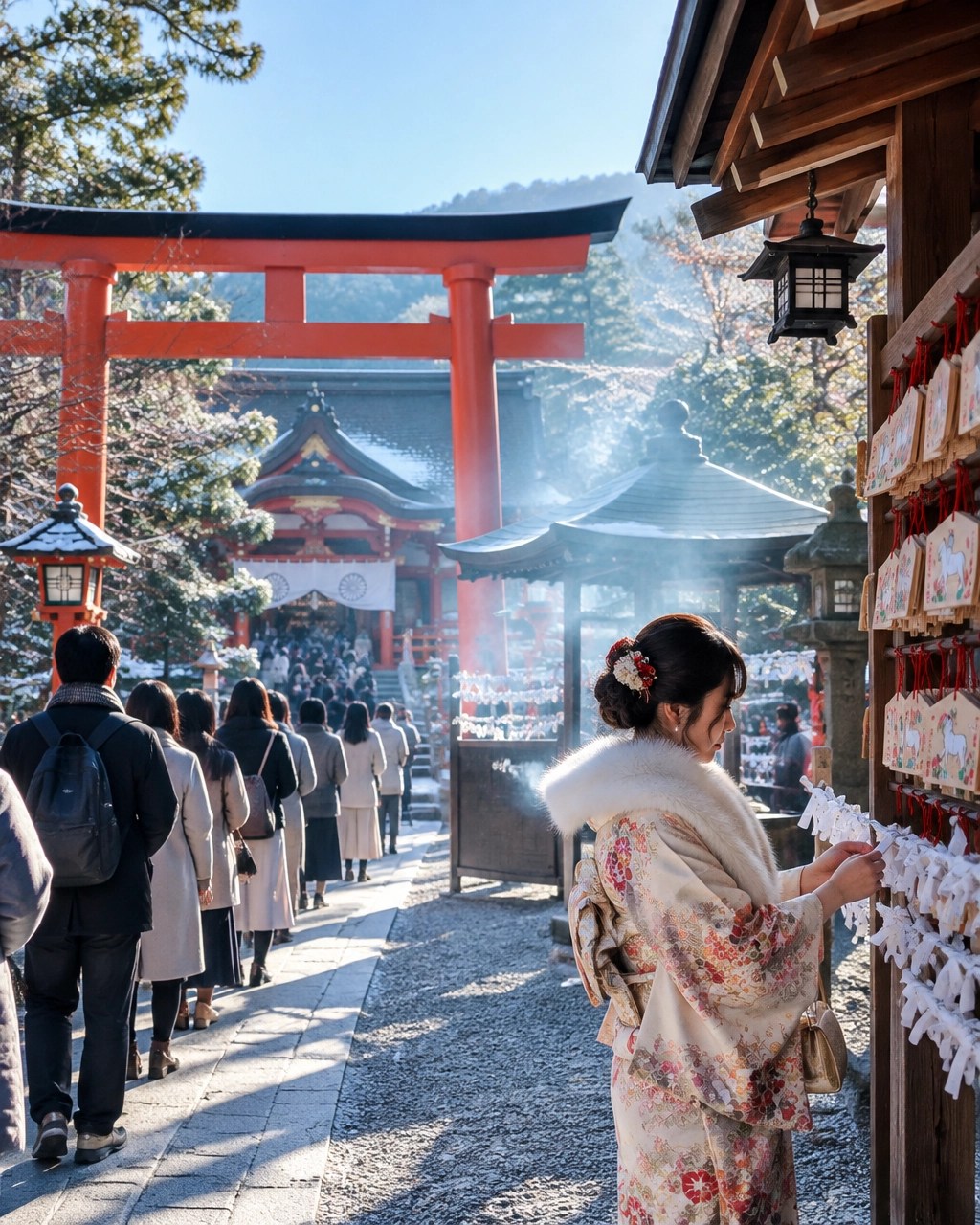
Hatsumode means making your first shrine or temple visit of the year, usually between 1 and 3 January. In Tokyo, Meiji Jingu draws enormous crowds. In Kyoto and Kanazawa, smaller neighbourhood shrines can offer a more intimate experience: the soft sound of bells, winter air scented with incense and the quiet movement of people making wishes.
You may draw an omikuji, a fortune slip that offers guidance for the year. If the fortune is difficult, it can be tied to a designated rack. Visitors also buy ema, small wooden plaques on which wishes are written and left at the shrine.
On New Year’s Eve, many people eat toshikoshi soba. Long buckwheat noodles symbolising longevity and the crossing from one year to the next. It is a beautifully simple meal before the first shrine visit.
The etiquette is important. Follow the flow of worshippers, avoid blocking the approach for photographs and ask before photographing people, especially during prayer. At a Shinto shrine, visitors traditionally bow, make offerings, clap twice, pray and bow again. Temples generally do not use the clapping ritual. If unsure, quietly observe those around you or follow posted guidance.
Best place to stay: a refined ryokan or boutique hotel on a quiet Kyoto street, close enough to reach a shrine but removed from the busiest approaches.
Best for: solo travellers and couples seeking a spiritual, cultural experience. Families can enjoy it too, particularly when visiting a smaller shrine outside peak hours.
Plan ahead: Japan is one of the destinations where four to six months’ planning makes a real difference. Our Japan cultural tour inspiration can be shaped around a calmer, beautifully guided itinerary.
🍇 Twelve Grapes in Madrid: Twelve Chimes, Twelve Months
At midnight on 31 December, Madrid’s Puerta del Sol becomes the centre of Spain’s most recognisable New Year ritual.
The tradition is wonderfully precise: eat one grape with each of the twelve clock chimes, with every grape representing a month of good fortune. The chimes are broadcast live across Spain, turning a single clock tower into a shared national moment.
The atmosphere in Puerta del Sol is exhilarating but intense: crowds, barriers, security arrangements and limited space. Choose small, seedless grapes if you are attempting the ritual yourself, listen for the actual twelve chimes rather than the preliminary sounds and do not rush. The point is luck, not speed.
For a gentler experience, join a smaller town square, book a restaurant with a local menu or enjoy the grapes at home with Spanish friends. Across the country, families gather around television broadcasts, cava and plates of food long before midnight.
Best place to stay: a boutique hotel a short walk from the centre but away from Puerta del Sol itself. You gain access to the atmosphere without sacrificing calm.
Best for: couples, families and first-time solo city-break travellers.
Plan ahead: reserve restaurants and central accommodation early. Madrid is a superb city choice if you want tradition with excellent food and a few quiet museum days afterwards.

🌊 Réveillon in Rio: White Clothing and the Seven Waves
Rio de Janeiro’s Réveillon is luminous, expansive and deeply connected to the sea. On Copacabana, many people dress in white to symbolise peace and renewal before midnight fireworks illuminate the Atlantic.
A widely known custom is to jump over seven waves, making a wish with each one. Offerings of flowers to Yemanjá, the sea-associated orixá honoured in Afro-Brazilian religious traditions, are also part of the spiritual landscape for many participants.
As a visitor, approach these customs with care. Do not handle or remove offerings, imitate religious practices for photographs or assume that every white-clad participant is taking part for the same reason. Ask a local guide or host if you are unsure.
Copacabana is spectacular but crowded, with long walks and complicated transport after midnight. A hotel with a secure terrace or an organised viewing area can be a more comfortable luxury choice than trying to move through the beach crowd.
Best for: couples and groups who want an unforgettable celebration. Families should consider a hotel-based event and remain attentive to crowd conditions.
Plan ahead: four to six months, especially for flights, accommodation and transfers.

🏮 Lunar New Year: A Reunion Before a Countdown
Lunar New Year is distinct from the Western New Year celebrations above. In 2027, early calendars and travel listings may show different dates; some cite 17 February 2027, while widely used lunar calendars place the first day on 6 February 2027. Confirm the official date before booking.
Rather than presenting the incoming lunar year with an uncertain animal name, it is best to check the local calendar and community guidance. Celebrations vary across China, Hong Kong, Singapore and worldwide communities.
The heart of the festival is often the reunion dinner. Generations gathering around a table before the new year begins. Lantern festivals, temple visits, red envelopes, lion dances and family rituals follow, but not every tradition belongs to every community.
Hong Kong and Singapore offer extraordinary public celebrations, although travel demand, transport changes and business closures can be significant. Book early, use the locally preferred name for the celebration and ask before photographing family or religious activities.
✨ Quieter New Year Traditions Worth the Journey
Not every meaningful ritual takes place in the world’s largest square.
- Madeira: Funchal’s midnight fireworks transform the harbour and surrounding hills into a luminous amphitheatre. The display has gained international record recognition, but the island is equally appealing for its slower mornings, Atlantic views and botanical gardens. Stay above the busiest waterfront for a beautiful, calmer perspective.
- Iceland: Local bonfires, or brennur, bring neighbours together with singing, speeches and winter warmth. The city’s fireworks are decentralised, creating a magical sense that the whole sky is participating. Look for authorised community bonfires and dress for wind, cold and smoke.
- Denmark: Many Danes watch the sovereign’s televised New Year’s speech before dinner. At midnight, people traditionally leap from a chair or sofa into the new year. Copenhagen adds grander events, while smaller towns offer a more intimate atmosphere.
- Stonehaven, Scotland: On Hogmanay, trained participants swing flaming fireballs through the town’s High Street before fireworks. Stand behind barriers, arrive early and follow stewards. This is a community ritual to witness respectfully, not a prop for close-up photography.
- Up Helly Aa, Shetland: Lerwick’s Viking fire festival is a separate January event, held on the last Tuesday of January, 26 January in 2027. A torchlit procession ends with the burning of a galley. Visitors may watch, but the festival belongs to the local community; participation in squads and access to halls are not tourist add-ons. Accommodation and transport should be booked well ahead through official Up Helly Aa information.
🧭 Choosing the Right Tradition for Your Travel Style
Best for families: Madrid’s grapes in a restaurant or hotel, Madeira’s fireworks from an elevated viewpoint, Denmark’s gentle home-style customs and a daytime Edinburgh programme.
Best for couples seeking quiet luxury: Kyoto’s hatsumode, a hillside Madeira hotel, a private Rio viewing experience or a heritage Edinburgh stay followed by the Highlands.
Best for solo travellers: Japan’s shrine visits, Madrid’s food-led city atmosphere, Iceland’s community bonfires and Stonehaven with an organised itinerary.
The smaller celebration is often the richer one. Away from the main party square, you hear the bells more clearly, meet local hosts and notice details that disappear in the crowd: a handwritten wish, a shared bowl of noodles, the glow of a bonfire on someone’s face.
🏨 Turn the Ritual into a Restful Journey
The most rewarding New Year trip does not end at midnight. Pair the celebration with two or three quiet days afterwards: a museum morning in Madrid, a ryokan breakfast in Kyoto, a Highland drive from Edinburgh or a peaceful Madeira terrace overlooking the Atlantic.
The first week of January is often among the quietest periods for travel, and in some destinations it can offer better value once the main celebration has passed. Our approach is simple: choose beautiful hotels in calm locations, heritage properties within walking distance of the ritual and rooms where you can genuinely sleep afterwards. Amazing food options, carefully timed transfers and upgraded transfers where available make the journey feel effortless.
At Raheem Tours, our service is excellent, fast, effective and reliable, and our experience means we can sometimes help with last-minute holiday bookings when plans change. We curate cultural journeys with the same care we bring to beach holidays and luxury escapes.
Planning a New Year ritual four to six months out gives you the best choice of flights, rooms and experiences. Scotland, Japan and Rio deserve particular attention.
For Instagram, comment RITUAL and we will send the direct blog link by DM.
Timeless travel, whenever wherever.

