

There is a particular pleasure in arriving somewhere just before the wider world catches up.
In Albania, that feeling is still wonderfully intact. The coastline glows in shades of turquoise, Ottoman rooftops climb sunlit hillsides, and the Albanian Alps remain gloriously wild. All within one compact, characterful country.
Repeatedly tipped as one of Europe’s most exciting destinations for 2027, Albania offers the beauty of the world in layers: beach, cultural discovery, adventure travel and hidden gems, often at a gentler price than its more established Mediterranean neighbours.
This is the definitive guide to planning it well. Before everyone else arrives.
🌊 The Albanian Riviera: turquoise water without the theatre
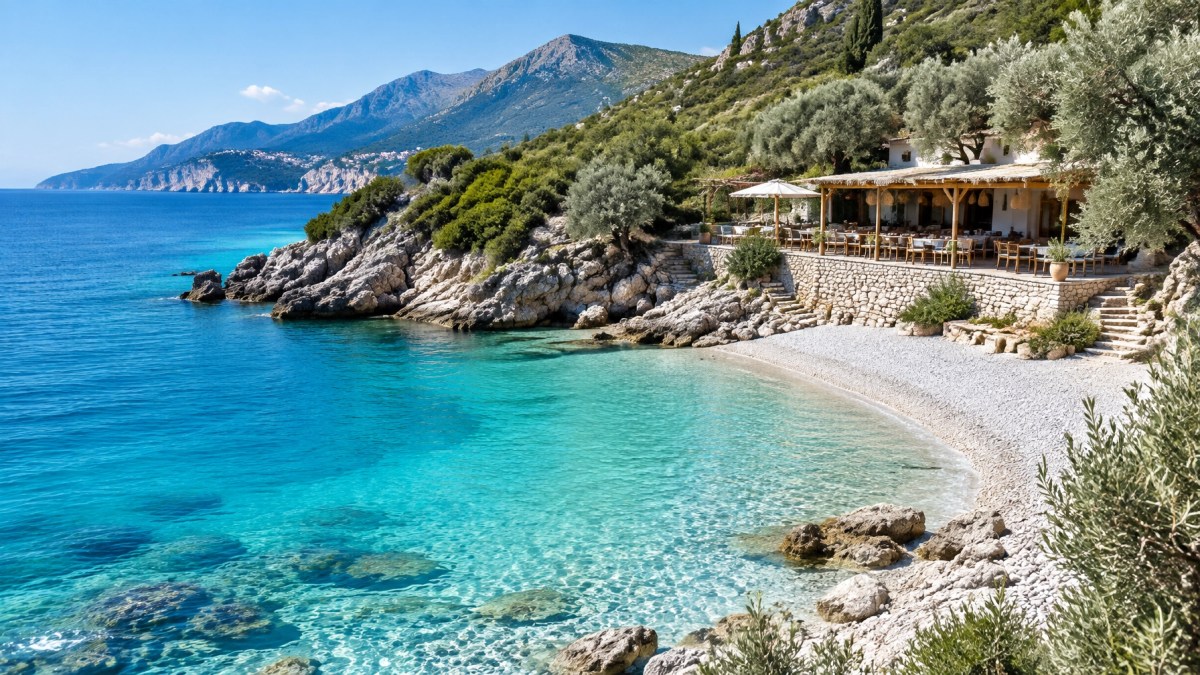
From Vlorë in the north to Sarandë and Ksamil in the south, the Albanian Riviera is a succession of olive groves, limestone mountains, pebble coves and seafront tavernas.
The “Europe’s Maldives” comparison appears often. It is useful only up to a point. Albania does offer exceptionally clear water and luminous white-and-turquoise bays, but its beaches are generally pebbly rather than powdery, its coastline more rugged, and its atmosphere far more authentically Mediterranean than resort-polished.
Begin in Vlorë, where the Adriatic and Ionian seas meet, then follow the coastal road towards the spectacular Llogara Pass. From high above, the mountains fall dramatically towards the sea, with views that make the journey itself one of Albania’s great experiences.
Below the pass, Dhërmi brings pine-fringed coves, whitewashed buildings and stylish beach restaurants. Himarë feels more relaxed: a beautifully placed base for swimming, boat trips and long lunches beneath olive trees. Southwards, Sarandë is livelier, while nearby Ksamil is known for its brilliant water and small islands reached by boat.
For tranquillity, the answer is not necessarily avoiding the Riviera altogether. It is choosing the right base. We look for seafront boutique stays away from the busiest Ksamil strip, peaceful properties around Himarë and Dhërmi, and hotels where the view matters more than the volume of the music.
When to visit the coast
The coast is generally at its best from May to early October.
- June: warm, bright and pleasantly energetic, with sea temperatures around 22–24°C
- July and August: hottest and busiest, with sea temperatures often around 25–27°C
- September: the sweet spot, warm water, softer light and fewer crowds
- Early October: still potentially swimmable, although some seasonal restaurants begin to close
For most travellers, June or September offers the finest balance of weather, space and value.
Who the Riviera suits
- Couples: secluded coves, sunset seafood and boutique seafront hotels
- Families: calmer bays, warm water and flexible apartment-style accommodation
- Solo travellers: easy coastal day trips, welcoming cafés and boat excursions
- Groups: villa stays, private transfers and a coastline made for exploring together
🏛️ Albania’s historic towns: stone, stories and slow afternoons
Beyond the beaches, Albania reveals a deeply layered cultural identity. Byzantine churches, Ottoman bazaars, castle walls and cobbled streets appear in landscapes that feel both familiar and entirely new.
Berat, the celebrated City of a Thousand Windows, is the essential first stop. Its white Ottoman houses rise above the Osum River, while the ancient castle (still home to churches, homes and local life) crowns the hilltop.
Stay inside or close to the historic centre in a restored stone guesthouse, where mornings begin with coffee, fresh bread and views across the tiled rooftops. The atmosphere is quiet rather than staged. That is the magic.
Try tavë kosi, Albania’s comforting baked lamb and yoghurt dish, alongside byrek, grilled meats and wine from the surrounding region.
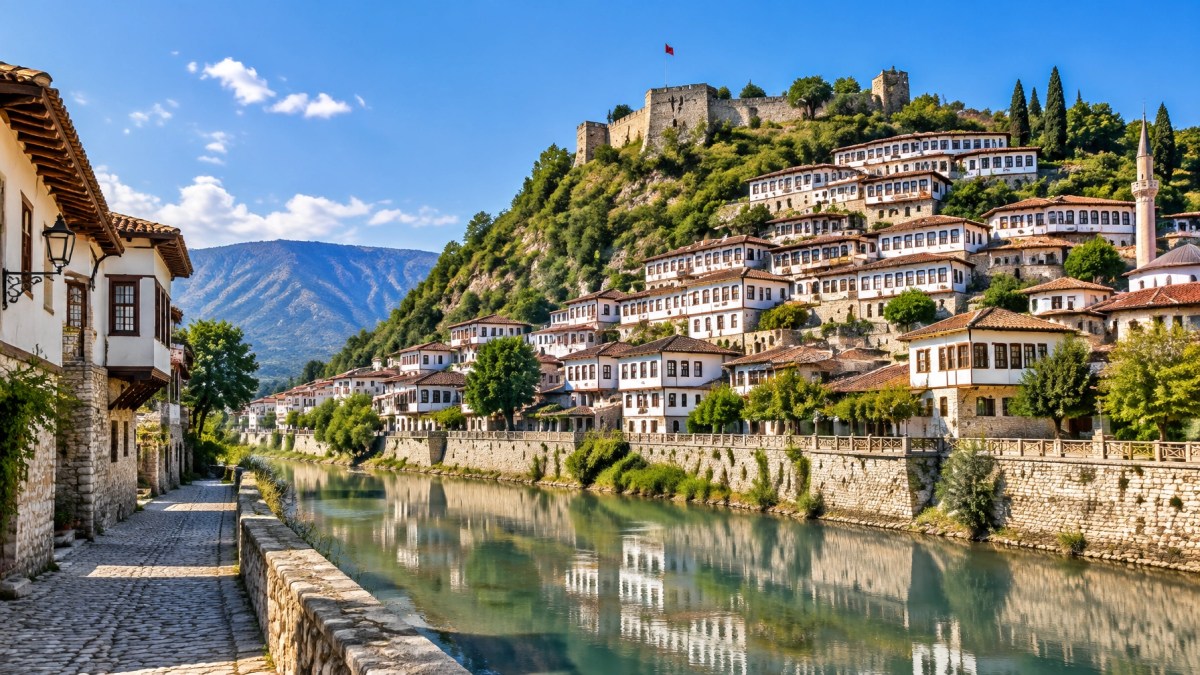
Further south, Gjirokastër is all slate roofs, steep lanes and beautifully preserved stone houses. Its vast castle overlooks the Drinos Valley, while the old town’s traditional homes offer a glimpse into Albania’s Ottoman-era architecture.
Gjirokastër was also the birthplace of acclaimed Albanian writer Ismail Kadare, whose work often explored the country’s complex history and identity. Allow time to wander without a fixed agenda: through the bazaar, into a traditional house, and towards a small restaurant serving qifqi, local rice-and-herb balls, and slow-cooked dishes.
Near Tirana, Krujë makes an evocative day trip. Its castle and Skanderbeg Museum tell the story of Albania’s national hero, while the old bazaar remains a lively place to browse handwoven textiles, copperware and traditional crafts.
In the north, Shkodër carries a different rhythm: bicycle-friendly streets, cafés, religious landmarks and Rozafa Castle, with broad views across the lake and surrounding plains. In the east, Pogradec sits on the Albanian shore of ancient Lake Ohrid, a UNESCO-listed natural and cultural region shared with North Macedonia.
Here, the landscape becomes gentler. Lakeside walks, mountain views and freshwater cuisine create a beautifully unhurried contrast to the Riviera.
Who the historic route suits
This side of Albania is ideal for culture-seekers, couples, solo travellers, photographers and families with older children. It also creates depth in a beach holiday. You do not just visit Albania. You begin to understand it.
⛰️ The Accursed Mountains: Albania at its most elemental
The name sounds dramatic. The landscape earns it.
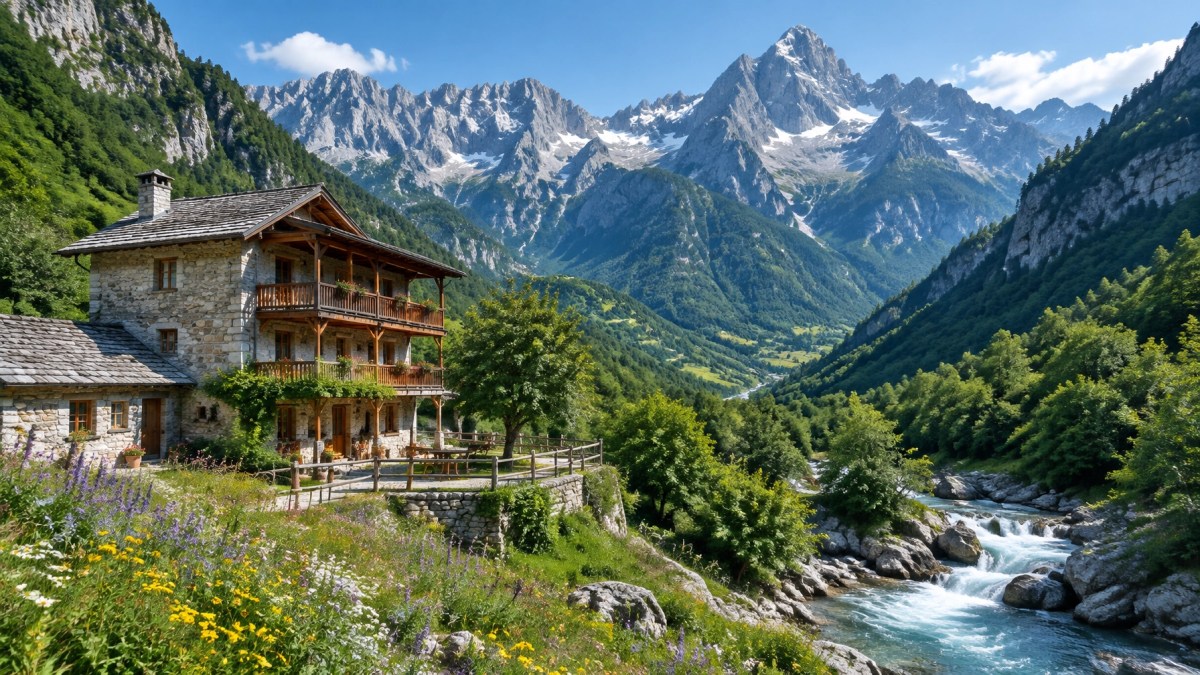
The Albanian Alps, often called the Accursed Mountains, rise sharply in the north with jagged limestone peaks, deep valleys, pine forests and villages where family hospitality remains central to the travel experience.
Valbona Valley National Park feels expansive and serene, while Theth National Park offers waterfalls, traditional stone homes and some of the country’s most memorable walking routes.
The classic adventure is the Valbona-to-Theth hike, usually around 14–17 kilometres, taking approximately six to nine hours depending on pace and conditions. The route climbs towards the Valbona Pass at roughly 1,800 metres, crossing forest, open mountainside and dramatic alpine terrain.
It is a serious day outdoors, but not a technical climb. Good footwear, water, sensible layers and an early start are essential.
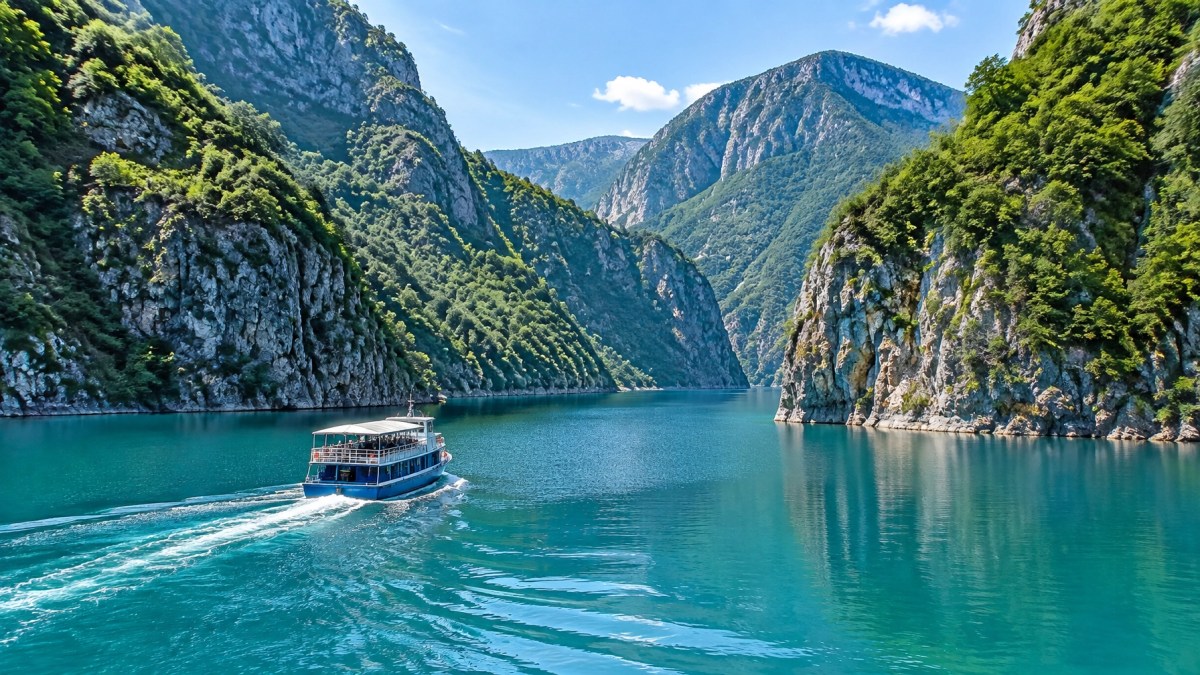
The journey is part of the story. A typical route begins in Shkodër, continues by road to Lake Koman, then crosses the lake by ferry through narrow, fjord-like canyons before continuing towards Valbona.
At night, stay in the kind of quiet mountain guesthouse run by a local family that makes the Alps feel personal rather than packaged. Expect simple rooms, home-cooked meals, mountain honey, fresh bread and, often, a small glass of raki offered with genuine warmth.
When to hike
The best months for the Albanian Alps are June to September. Snow and changing conditions can make the high pass unsuitable outside the main season, while July and August bring the most reliable summer weather, and the most hikers.
For a more peaceful experience, choose late June or September, subject to trail and transport conditions.
✈️ Flights, transfers and the best way to travel
For a full Albanian itinerary, Tirana International Airport is the main gateway. Direct flights from the UK are commonly around three hours, although routes and schedules vary by airport and season.
From Tirana, allow approximately:
- 2.5–3 hours to Vlorë
- 3.5–5 hours to Berat or Gjirokastër, depending on the route
- A full travel day to reach the northern Alps
If your priority is southern Albania, a Corfu and Sarandë combination can be convenient. Fly from the UK to Corfu, then take a seasonal ferry to Sarandë, often around 30–70 minutes, depending on the service. Ksamil is a short onward road transfer.
Driving offers freedom, particularly for the Riviera and historic towns, but mountain roads and local driving styles require confidence. For many travellers, a private driver-guide is the more comfortable choice. You can enjoy the views, stop for photographs and avoid losing time to unfamiliar roads.
Where available, we can also arrange upgraded transfers, creating a smoother journey from airport to hotel and between regions.
🍽️ What Albania tastes like
Look for:
- Byrek with cheese, spinach or meat
- Tavë kosi, baked lamb with yoghurt
- Fresh Ionian seafood and grilled fish
- Mountain lamb and slow-cooked meats
- Fërgesë, made with peppers, tomato and cheese
- Local Albanian wine
- Strong coffee and homemade desserts
- Raki, usually offered as a gesture of welcome
A local restaurant meal might cost around £6–12 per person, while comfortable mid-range travel may sit around £50–90 per person per day, excluding flights and higher-end accommodation. Prices rise in July and August, particularly in Ksamil.
Carry some Albanian lek, especially in mountain villages and smaller guesthouses. Cards are increasingly accepted in established hotels and restaurants, but cash remains useful.
🌿 The ideal two-centre Albania holiday
Albania works beautifully as a two-centre trip:
- Coast plus mountains: Himarë or Dhërmi paired with Theth or Valbona
- Beach plus culture: Ksamil or Sarandë paired with Berat and Gjirokastër
- History plus nature: Tirana, Krujë and Shkodër followed by Lake Koman and the Alps
This is where thoughtful planning matters. Albania’s tourism infrastructure is developing quickly, and the most beautiful properties (particularly seafront boutique hotels, restored historic guesthouses and family-run mountain stays) are limited.
For summer 2027, the best rooms are expected to go early. That said, our fast, effective and reliable service means we can still handle last-minute holiday requests successfully, searching for the right combination of hotel, transfers and experiences rather than simply offering whatever remains.
We believe the right hotel should be beautiful but never too lively. The right meal should feel discovered, not standardised. And the right itinerary should leave space for the unexpected.
At Raheem Tours, we curate Albania around your pace, with amazing food options included, carefully chosen locations and practical support from the first enquiry to the journey home. Explore our wider destination guides or get to know our approach.
Your Albania 2027 invitation
Come for the turquoise coast. Stay for the stone towns, mountain air, generous tables and the feeling that you have arrived just in time.
Albania is not untouched, and it should not be treated as a blank canvas. It is a living country with its own history, hospitality and rhythm: one to meet with curiosity and respect.
Timeless travel, whenever wherever.
If you saw this guide on Instagram, comment ALBANIA and we will send the direct blog link to your DMs.

