

Three cities, three temperaments, one river. In winter, Egypt opens at a gentler pace: cool mornings, luminous stone and the quiet pleasure of returning to a Nile-view terrace after a day among the ancients.
🌤️ Why winter is the Nile’s finest hour
From November to February, Egypt is made for exploring. Cairo’s winter light softens the city’s edges, Luxor’s mornings are comfortable for long visits among the temples, and Alexandria’s sea breeze lends its grand avenues a different kind of romance. Days are generally mild, but evenings, especially in Luxor and on the river, can feel cool. Pack layers, comfortable closed shoes, sun protection and a light jacket.
December and early January are the busiest weeks, around the holidays. The weeks just before and after can feel calmer and offer better value, while still bringing that glorious winter clarity. For winter 2027, Nile cruises and the best-known riverside hotels tend to book first; balloon places also go early.
A 10–12-day journey gives you room to enjoy all three cities without turning every day into a transfer. Think Cairo, Luxor and a few nights on a Luxor-to-Aswan cruise, then Alexandria as a slower coastal finale, or place it at the beginning if that suits your flights. Our Raheem Tours holiday planners can help shape the route, arrange private transfers and, where available, add upgraded transfers or private Egyptologist guides. We can also help with last-minute requests, subject to availability.
🏙️ Cairo: intensity, softened by the Nile
Cairo arrives in layers: the hum of its streets, a minaret above the rooftops, then the startling stillness of the desert beyond. Start early at the Pyramids of Giza and the Sphinx, ideally at opening, before the day’s heat and busiest visitor groups build. Be prepared for persistent offers of camel rides, photographs or assistance; a calm, polite “no, thank you” is enough. For the broadest view, consider the plateau’s panorama viewpoint, and agree any ride or service price clearly in advance.
Give the Grand Egyptian Museum at Giza its own unhurried visit if you can. It has been opening in phases, so check the museum’s official visitor information for current gallery access, hours and ticket details before booking. Cairo’s older sites tell another part of the story: Saqqara, with the Step Pyramid and the atmospheric Serapeum, and Dahshur, where the Bent and Red Pyramids stand in a quieter sweep of desert with far fewer visitors.
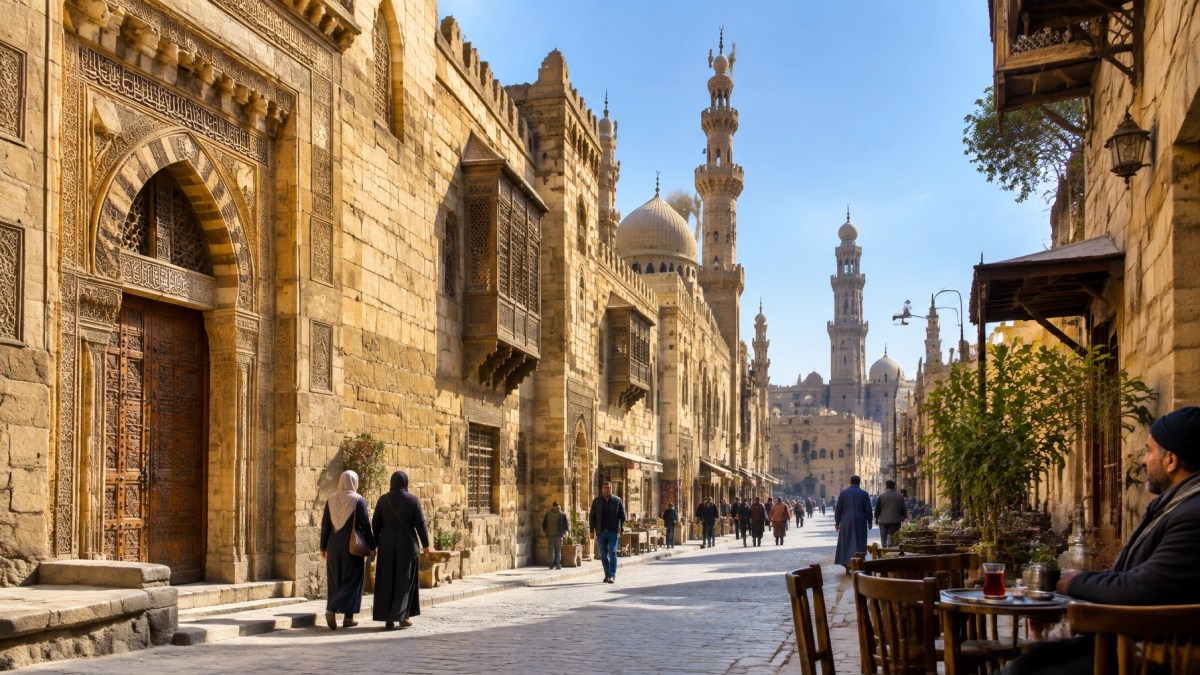
In Islamic Cairo, look up as you walk: carved stone, old doors and minarets make Bayn al-Qasrayn a place to linger, not just pass through. At Khan el-Khalili, browse with curiosity: some stalls are geared to visitors, while workshops and small specialist shops may offer a more considered find. Bargaining is part of the exchange in many market settings; keep it friendly, agree the price before buying and walk away graciously if it doesn’t feel right. Dress modestly for mosques and follow local guidance at entrances.
Then change tempo. Coptic Cairo’s Hanging Church, a sunset felucca ride, mint tea in an old ahwa with a backgammon game underway: each offers a glimpse of daily life beside the monuments. For a broader view, Cairo Tower catches the city’s scale, while Al-Azhar Park gives you green space and a memorable view toward the Citadel, especially near dusk. A dinner table overlooking the Citadel makes a beautiful end to a full day. If you want something more unexpected, explore Al-Fustat’s pottery district with a guide, or ask about the cave church in Garbage City; both reward respectful curiosity and thoughtful planning.
🛎️ Stay for the view
Cairo’s grand riverside hotels are not simply places to sleep. They are part of the journey: terrace breakfasts facing the Nile, polished old-world spaces and the pleasure of watching the city shift from day to evening from your own balcony or window. Ask for a Nile-view room when planning, especially if a serene, beautifully placed hotel matters more to you than a lively location. That is the difference between staying in the city and having a quiet place to return to it.
🏛️ Luxor: an open-air museum, best met slowly
Begin on the East Bank at Karnak, ideally near opening, when its vast courtyards and the columns of the Hypostyle Hall feel especially immense. Later, save Luxor Temple for dusk: as the light fades, the avenue of sphinxes and the temple’s stonework take on a warm glow.
Across the river, the West Bank rewards an early start. At the Valley of the Kings, choose a small number of tombs rather than trying to see everything; entry arrangements and which tombs are open can vary, and some require a separate ticket. A guide can help you choose a visit that suits your interests and pace. Pair the valley with Hatshepsut’s temple, the Colossi of Memnon and, if time allows, Deir el-Medina: the workers’ village, where daily life comes into view alongside royal grandeur. The Valley of the Queens adds another perspective on the people and artistry of ancient Thebes.
A hot-air balloon at sunrise is Luxor’s signature view: the river, fields and temples emerge below in delicate morning light. Book with a reputable operator, confirm what the price includes, and treat the flight as weather-dependent: cancellations can happen, and safety comes first.
For an even gentler rhythm, take a Nile cruise from Luxor to Aswan, or the reverse. Shore visits at Esna, Edfu and Kom Ombo make sense of the landscape between the great cities; the Esna lock is a small but memorable glimpse of river life at work. A cruise beats a day trip for pace. You unpack once, wake near the next story and have time for the quiet stretches between sights. Ask exactly which excursions, guides, entrance fees and transfers are included.
On the West Bank, light spills across the hills as the day winds down. Returning by boat at sunset (river air on your face, Luxor slipping into gold) is a moment that stays with you.

🌊 Alexandria: the Mediterranean’s faded elegance
Alexandria changes the mood. Here, the Nile journey meets the sea: the Bibliotheca Alexandrina, the Corniche, Montaza’s gardens and the Citadel of Qaitbay, standing on the site associated with the ancient Lighthouse of Alexandria. Add the Catacombs of Kom el-Shoqafa and Pompey’s Pillar for layers of history beneath the city’s present-day rhythm.
Take time for seafood near the harbour: fish and shrimp, simply prepared, with the Mediterranean close by. Alexandria has reinvented itself across millennia, yet its beauty is in the traces: a façade weathered by salt air, a broad avenue, a sea breeze arriving just as the city grows quiet. From Cairo, allow roughly 2.5 to 3.5 hours by fast train or private car, depending on route and traffic; check the latest train schedules and leave a generous margin.

🍽️ A table worth travelling for
Egypt’s flavours are part of the route. In Cairo, try koshari, a comforting bowl of lentils, rice, pasta and crisp onions, or find feteer served warm and flaky. Molokhia and grilled kofta bring different textures to the table; neighbourhood kofta houses and old cafés make memorable stops between visits. In Alexandria, choose the day’s fish or shrimp by the sea. And at a grand hotel, afternoon tea offers a more leisurely ritual. An elegant pause between the city and the river.
🧭 A few details that make the journey easier
- Respectful visits: Cover shoulders and knees at mosques and religious sites; carry a scarf if you’d like one for a mosque visit. Follow posted instructions, remove shoes where requested and ask before photographing worshippers.
- Photos and opening times: Rules vary by site, especially indoors. Check on-site signs, ask staff when unsure and never photograph security or military personnel or installations. Hours can shift with season, prayer times or special arrangements; confirm close to your visit.
- Comfort and safety: Drink safe water, carry sun protection even in winter, and dress in layers for early starts. In busy markets and transport hubs, keep valuables discreet. Registered guides and pre-arranged transfers can make longer sightseeing days smoother.
- Baksheesh: Tipping is customary for many services, but amounts vary. Check whether service or gratuities are already included, carry small Egyptian-pound notes and agree prices for optional services before accepting them.
- Booking: Holiday weeks are popular. Reserve cruises, signature hotels and balloon places early if you have a particular ship, room or departure in mind. Last-minute plans can still come together, but availability is never guaranteed.
Cairo dazzles, Luxor opens the horizon, and Alexandria lets the journey exhale beside the sea. You don’t just visit Egypt. You feel its many lives moving around one river, at a winter pace that gives each city room to unfold.
Timeless travel, whenever wherever.
Planning this journey? Comment NILE on our Instagram post and we’ll DM you the direct link to this guide.
