

Timeless travel, whenever wherever.
There is a gentler way to cross Europe. Not airport-hopping, not racing from one city centre to the next, but watching the landscape change beyond the window: moorland becoming mountain, mountain becoming lake, lake becoming vineyard.
For 2027, rail travel is becoming more than a practical alternative. It is an experience in its own right: a chance to slow down, dine well, sleep between destinations and arrive with a sense of place already forming.
From the Caledonian Sleeper to the Glacier Express, these are Europe’s most beautiful sleeper and scenic rail journeys, with thoughtful ways to pair each one with refined hotels, hidden gems and stays that are beautiful but never too lively.
🚆 Sleeper or scenic daytime train?
A sleeper train is about changing the rhythm of travel. You board in the evening, settle into a couchette or private cabin, and wake closer to your destination. It can save a hotel night and make long-distance travel feel purposeful rather than tiring.
A scenic daytime train is slower in the best possible way. The landscape is the destination: alpine viaducts, fjords, rivers and high passes unfold in full view.
Choose a sleeper if you want:
- To connect two distant regions overnight
- A private cabin or first-class-style comfort
- More time at your destination
- A memorable alternative to short-haul flights
Choose a daytime scenic train if you want:
- Panoramic views and photography
- A relaxed, immersive journey
- Food served while the scenery changes
- A gentle centrepiece for a honeymoon, solo trip or cultural itinerary
The most beautiful journeys often combine both.
1. Caledonian Sleeper: London to Scotland
The Caledonian Sleeper begins beneath London’s city lights and carries you towards Edinburgh, Glasgow, Aberdeen, Inverness or Fort William. The Highland routes can take up to around twelve hours, while the Lowland services are shorter, giving you the rare pleasure of falling asleep in one country and waking to another landscape entirely.
By morning, the scenery has changed to lochs, heather-covered hills, rugged moorland and the vast quiet of the Highlands.
Accommodation ranges from reclining seats to private rooms, including Club Rooms with en-suite facilities on selected services. Luggage is included, and the train’s official rooms and seats guide is useful when comparing comfort levels.
Best months to travel: April to October for longer daylight and softer Highland colours. September and early October bring amber hillsides and a quieter atmosphere.
Food: Light refreshments and breakfast options are available, though many travellers enjoy boarding with a beautifully prepared picnic, oatcakes, smoked salmon, local cheese and something sparkling for the journey.
Build it beautifully: Pair the sleeper with two nights in Edinburgh, then continue towards Aviemore, Fort William or Inverness. Choose a country-house hotel or a secluded lodge outside the busiest centres, with time for a loch cruise, whisky tasting or a gentle walk rather than an overfilled sightseeing schedule.
Who it suits: Couples, families wanting an adventure without complicated airport changes, and solo travellers who prefer a clear, comfortable route into Scotland.
Explore Raheem Tours’ Scotland destination guide for inspiration.
2. ÖBB Nightjet: Austria, Germany and Switzerland
The ÖBB Nightjet network makes central Europe feel wonderfully connected. Routes link cities including Vienna, Salzburg, Munich, Hamburg, Zürich, Berlin and Amsterdam, with the precise timetable varying by season and service.
This is the rail journey for pairing grand cities with alpine pauses. Spend an evening among Vienna’s concert halls, board at night, then wake closer to the mountains: perhaps in Salzburg or Zürich, depending on your chosen route.
Cabin options generally include seats, couchettes and sleeping compartments, with more private and comfortable choices available at a higher fare. Reservations are essential on night trains; Interrail’s night-train guide explains the different accommodation categories and reservation principles.
Best months to travel: May to October for lakes, hiking and long daylight. December brings markets and snow, although winter weather can affect mountain connections.
Food: Breakfast service varies by route and accommodation. Pack a few local treats from the station: Austrian pastries, Swiss chocolate and a good bottle of water make the cabin feel instantly more welcoming.
Build it beautifully: Try Vienna–Salzburg–Zürich, allowing two or three nights in each. Stay just outside the most animated old-town districts, in a lakeside village near Salzburg or a quiet hotel on the edge of Zürich, then use day trains for cultural visits.
Who it suits: City-break travellers who want to add nature, families who appreciate overnight efficiency and couples looking for a refined multi-country itinerary without constantly repacking.
3. Venice Simplon-Orient-Express: the first-class luxury benchmark
The Venice Simplon-Orient-Express belongs in a different category. This is not simply transport between two destinations; it is a beautifully staged journey through European history.
Original carriages, polished wood, Art Deco details and formal dining create an atmosphere that feels almost cinematic. Routes vary, but classic journeys connect cities such as London, Paris and Venice, often taking around a full day depending on the itinerary.
Cabins may include historic compartments, suites and grand suites, with attentive service throughout. The experience is unapologetically luxurious, but its appeal is not only expense. It is the sense of occasion, the ceremony of dressing for dinner, the pause between courses as the countryside moves beyond the window.
Best months to travel: Spring and early autumn for gentle light, comfortable temperatures and elegant city stays. Festive departures bring a particularly theatrical atmosphere.
Food: Fine dining is central to the journey, with multi-course menus, afternoon tea and carefully selected wines served in the restaurant carriages.
Build it beautifully: Combine the train with two nights in Venice, then retreat to a quieter lagoon island or a refined hotel in the Veneto countryside. Alternatively, begin in Paris and add a discreet boutique stay before travelling south.
Who it suits: Honeymooners, milestone celebrations and travellers seeking first-class luxury choices where the journey itself is the occasion.
4. Glacier Express and Bernina Express: the Swiss Alps in full view
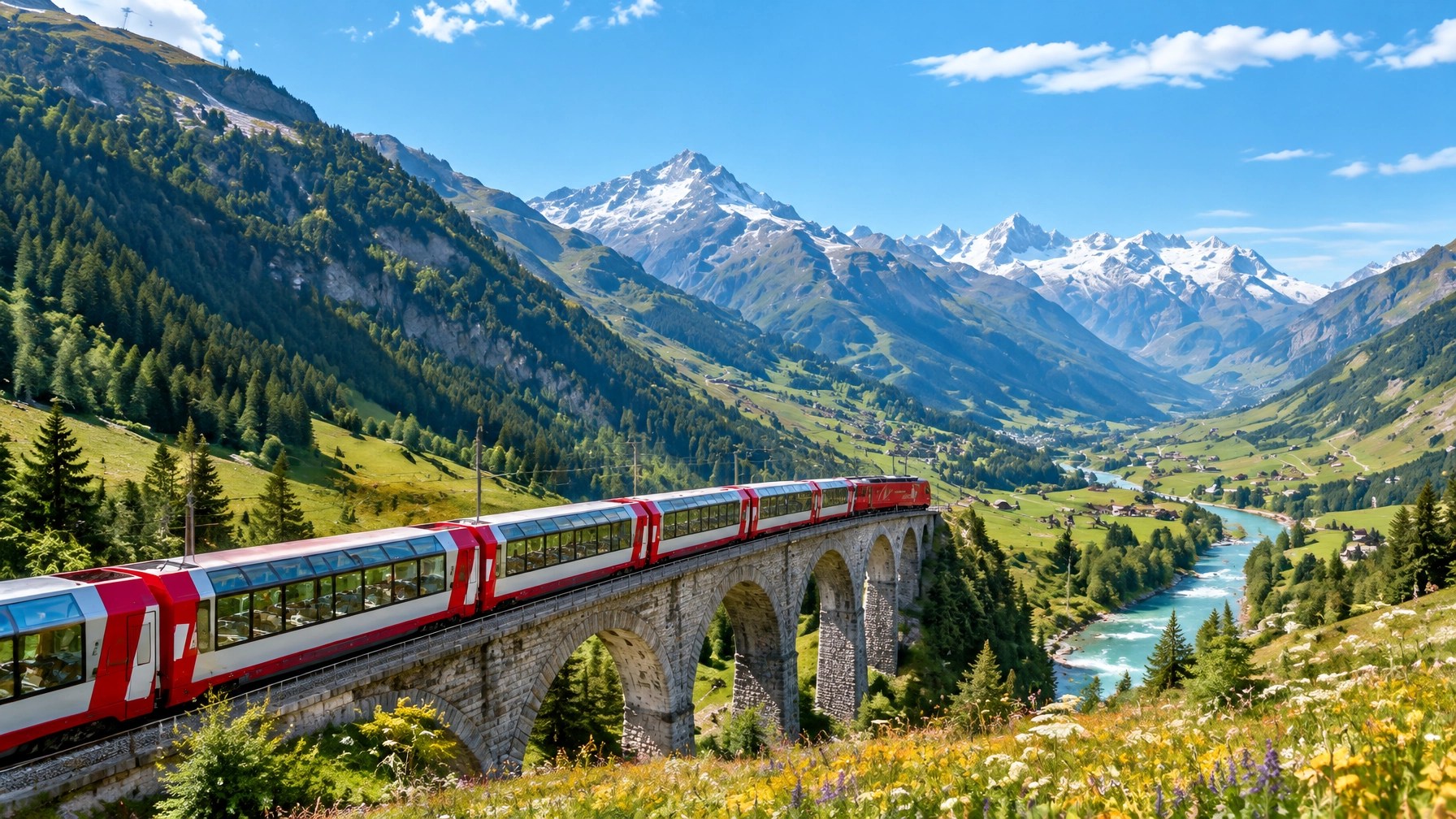
Switzerland offers some of Europe’s most immersive scenic daytime train journeys.
The Glacier Express travels between Zermatt and St. Moritz in around eight hours, crossing 291 bridges and passing through 91 tunnels. Panoramic windows frame the Matterhorn region, the Rhine Gorge, high viaducts and the Engadin landscape. Onboard dining can include freshly prepared Swiss dishes served at your seat, with upgraded comfort available through Excellence Class.
The official Glacier Express route and class guide is the best place to check current schedules, luggage information and seasonal operating details.
The Bernina Express, travelling between Chur and Tirano, is shorter but no less dramatic. It rises through high Alpine scenery, crosses elegant viaducts and descends towards the Italian-speaking landscape around Tirano.
Best months to travel: June to September for clear mountain trails and green valleys. February to March can be magical for snow, although conditions and visibility are naturally less predictable. October brings golden forests and fewer visitors.
Food: Glacier Express offers onboard dining; on Bernina routes, consider reserving a picnic or planning a long lunch at one of the stops.
Build it beautifully: Choose three nights in a quieter Swiss base, such as Pontresina, Arosa or a lakeside village near Montreux, rather than moving every night. Add a spa afternoon, a fondue dinner and one gentle walking day.
Who it suits: Families, photographers, couples and anyone wanting a high-impact Alpine experience without strenuous hiking.
You can also explore Raheem Tours’ Switzerland destination page.
5. Norway’s scenic railways: fjords, forests and the far north
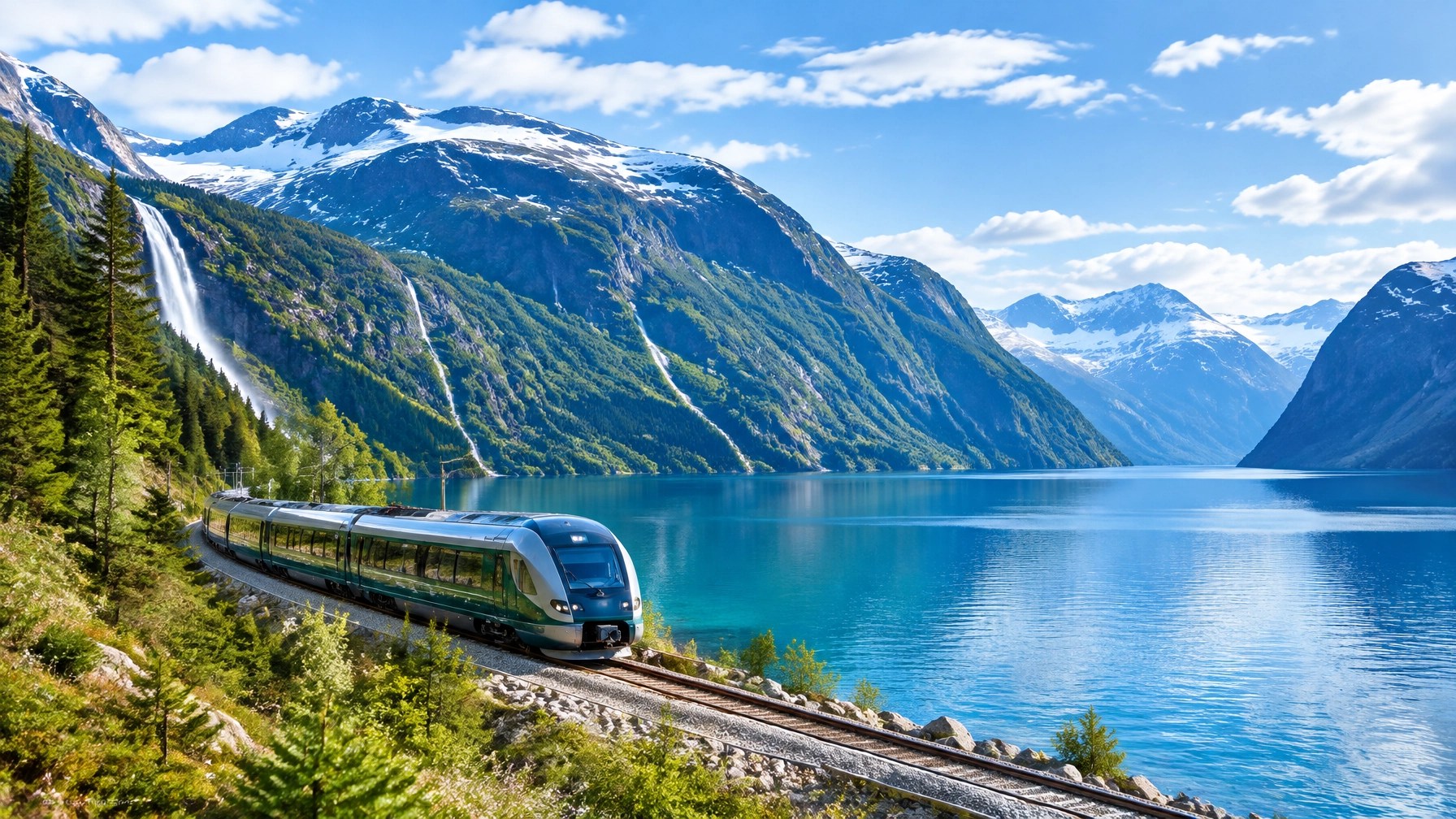
Norway’s railways offer adventure travel with a calm pulse.
The Bergen Railway links Oslo and Bergen in roughly seven hours, crossing the Hardangervidda plateau between urban culture and fjord country. The Dovre Line travels between Oslo and Trondheim through high mountain landscapes, while the Nordland Line continues north from Trondheim towards Bodø, crossing the Arctic Circle.
These are daytime journeys for watching the terrain open out: pine forests, snow-streaked ridges, waterfalls and distant water appearing between the hills.
Best months to travel: May to September for fjord cruises, hiking and long daylight. Winter offers snow-covered landscapes, but check operating conditions carefully.
Cabin and class options: These are primarily daytime trains, with standard and upgraded seating depending on the service. For longer Nordic connections, combine them with a sleeper elsewhere in the itinerary rather than expecting a fully hotel-like cabin on every route.
Food: Café facilities vary. Bring local bread, brown cheese, berries and coffee for a simple onboard feast.
Build it beautifully: Spend two nights in Oslo, travel to Bergen by day, then retreat to a small fjord hotel or peaceful waterfront lodge. Avoid trying to see every fjord in one trip. One well-chosen region, explored slowly, feels far richer.
Who it suits: Solo travellers, active couples and families who want wide landscapes, cultural depth and a quieter kind of adventure.
Discover Raheem Tours’ Norway destination page.
6. Portugal and Spain: an Iberian rail journey with local flavour
A Portugal–Spain itinerary works beautifully as a sequence of short rail journeys rather than one continuous sleeper.
Begin in Porto, where the Douro Valley railway follows the river past terraced vineyards and granite villages. Continue towards northern Spain by connecting through the Galicia region, then choose between Santiago de Compostela, A Coruña or a longer journey towards Madrid.
The experience is less about polished luxury and more about atmosphere: tiled stations, seafood lunches, old quarters, vineyard landscapes and the warm shift from Portuguese to Spanish culture.
Best months to travel: April to June and September to October, when temperatures are comfortable and the countryside feels especially vivid. July and August are lively and hotter.
Cabin and class options: Most of this route uses daytime trains with standard and first-class seating where available. A private transfer can make the more complex connections feel effortless.
Food: This is one of Europe’s best rail-and-food pairings, pastel de nata in Porto, Douro wine, Galician octopus, fresh seafood and long lunches in quiet plazas.
Build it beautifully: Stay in a characterful Porto hotel away from the busiest riverside streets, spend two nights in the Douro Valley, then choose a small historic hotel in Santiago rather than a large city-centre property.
Who it suits: Food lovers, couples, families with older children and culturally curious travellers who prefer hidden gems to a checklist of major attractions.
Practical planning for 2027
Sleeper cabins, private compartments and panoramic seats are limited: particularly for summer, Christmas markets and school holidays. Start planning six to nine months ahead where possible, and earlier for the Venice Simplon-Orient-Express or larger family groups.
Keep luggage compact. A medium suitcase and a flexible day bag are much easier on trains than several large cases. Families should check berth arrangements carefully, while solo travellers may prefer a private cabin or women-only compartment where available.
Timetables, rolling stock and routes can change, so confirm the final details before booking. If a preferred departure is unavailable, our team can often look at alternative dates, hotel combinations and connecting transfers.
At Raheem Tours, we can bring together rail tickets, beautiful but never too lively hotels, food-focused stops and upgraded transfers where available. Our service is fast, reliable and personal. Useful when plans are complex or a last-minute opportunity appears.
Rail travel asks you to notice more. The changing light, the village below the viaduct, the first outline of a mountain. You don’t just visit Europe. You let it unfold.
Timeless travel, whenever wherever.
Planning your 2027 rail escape? Comment RAIL on our Instagram and we’ll send you the direct link by DM.


