




 Raheem Tours
19 November 2026
Raheem Tours
19 November 2026
Timeless travel, whenever wherever.
🌅 A city that asks you to slow down
Between the Mekong and Nam Khan rivers, Luang Prabang feels like a graceful pause in Southeast Asia. Temple courtyards open onto quiet lanes, French-colonial shophouses shelter bakeries and small boutiques, and the morning begins with the soft rhythm of temple drums.
This is a beautiful counterpoint to the energy of Vietnam or China: a place for lingering over breakfast, following the river as the light changes, and finding meaning in the details. As a cultural stop on an Asia itinerary, it pairs naturally with Hanoi, Ninh Binh and our Lan Ha Bay journey. A richly layered Indochina route, from limestone seascapes to the calm of the Mekong.
Luang Prabang’s centre is small. Give the town itself two or three unhurried days, then leave time for waterfalls, villages and river travel beyond it.
🛕 Temples, lanes and a sunset above two rivers
At the tip of the peninsula, Wat Xieng Thong is often considered the city’s finest temple. Look for the vivid Tree of Life mosaic, gold-stencilled walls and the shelter built for the royal funeral carriage. Nearby, Wat Mai and Wat Sensoukarahm offer quieter moments to take in the city’s living Buddhist traditions.

For a view across rooftops, water and green hills, climb Mount Phousi’s 328 steps. Sunset is the popular choice, but dawn is more peaceful, and lets you watch the town wake without joining the busiest hour. Dress modestly at temples, remove your shoes where asked, and remember the local etiquette of keeping your head low and your feet away from Buddha images.
Below, French-colonial shophouses have found a second life as bakeries, cafés and boutiques. In the evening, the night market’s stalls bring out Hmong textiles, mulberry-paper crafts and locally grown coffee. Browse gently; a thoughtful question and a fair purchase make a better souvenir than a hurried photo.
🙏 Tak Bat: witness with care
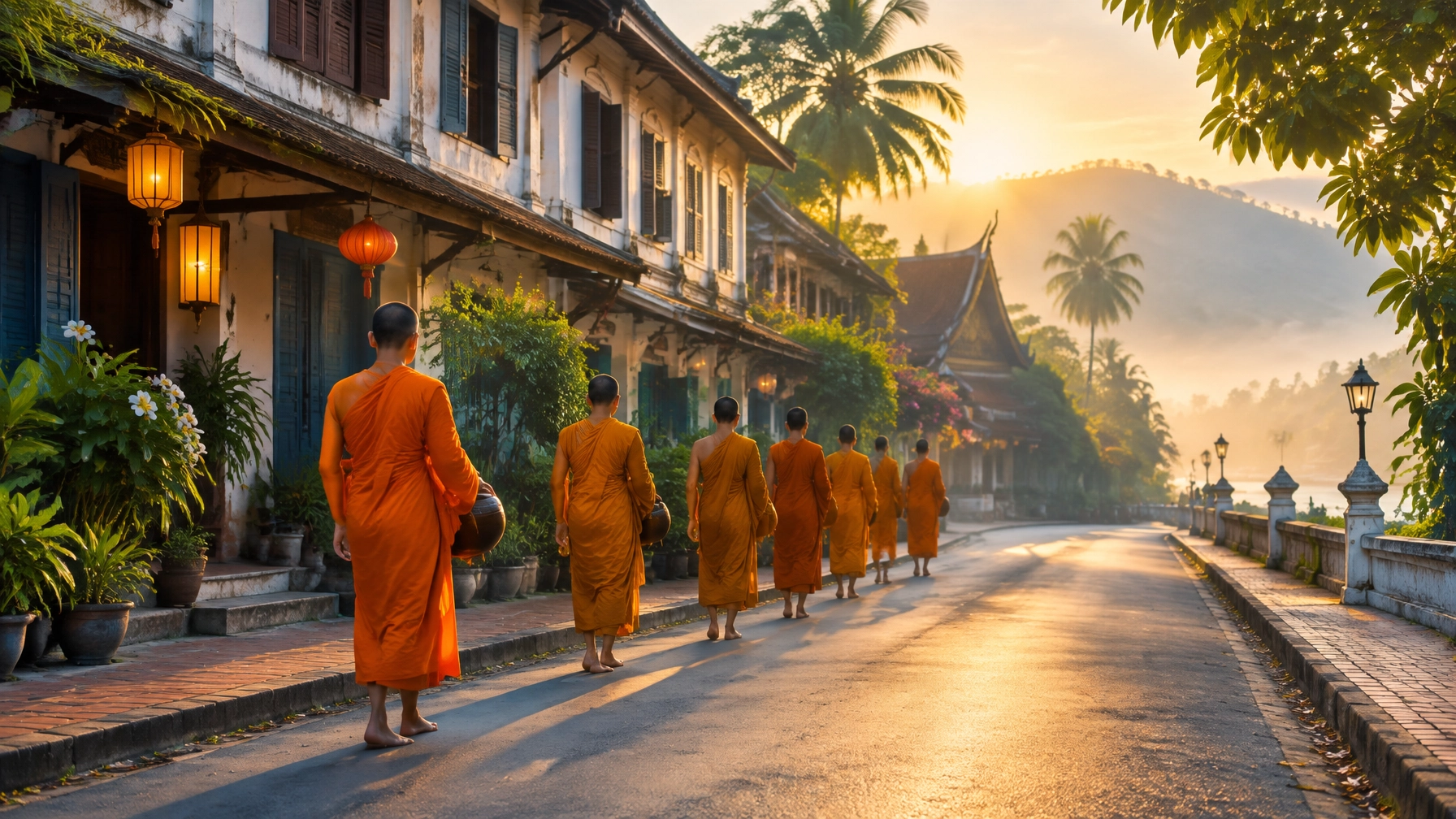
At dawn, monks walk the streets to receive offerings of food from local residents. Tak Bat is a sacred daily ritual, not a tourist performance. It has faced pressure from overtourism, so the way you choose to observe matters.
Timing changes with the season: roughly 5:30–6:00am in the warmer months, and later in the cool season. If you are not offering alms, watch quietly from a respectful distance, without blocking the route or stepping into the rows. Keep shoulders and knees covered, never use flash or touch a monk, and avoid turning your back on monks for photographs. Ask before taking pictures of people.
If you wish to participate, do so only with guidance from a trusted local host. Offer freshly purchased sticky rice, kneeling and barefoot or appropriately dressed, and follow their lead. The official Luang Prabang tourism guidance explains how to take part respectfully. Sometimes the kindest way to experience a ritual is simply to give it space.
💧 Kuang Si Falls, in shades of teal
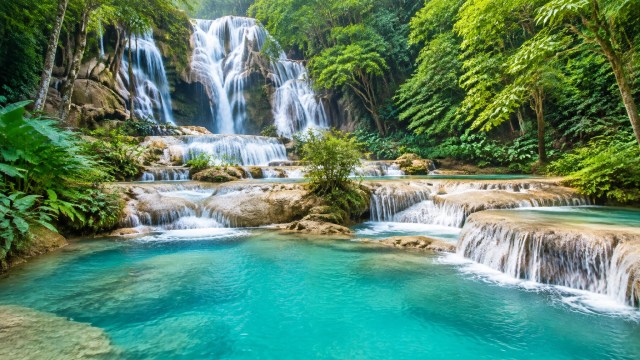
About 30 kilometres south of town, Kuang Si Falls spills through a series of limestone tiers into turquoise pools beneath the trees. Arrive early (before 9am, when the pools feel calmer) and take time to walk beyond the first viewpoint. By late morning, more visitors arrive.
At the entrance, the Free the Bears rescue centre offers a meaningful stop: its rescued bears are cared for at a protected sanctuary. Swimming is allowed only in designated pools, so follow the signs and local guidance.
The falls change character with the seasons. November to April often brings clearer blue pools, while May to October means fuller, more powerful water and lush green surroundings. Both have their own beauty; the best choice depends on whether you picture still, glassy pools or a waterfall at full voice.
🚤 The Mekong, at river pace
A sunset cruise turns the Mekong into a long ribbon of bronze. From the water, the city’s riverside dining terraces begin to glow, and evening feels less like a schedule than an invitation to stay a little longer.
For a deeper journey, take a boat upstream to Pak Ou Caves, where generations of pilgrims have placed thousands of Buddha images. The trip is sometimes paired with Ban Xanghai, known for its local whisky-making: approach village visits with curiosity and respect, and ask before photographing residents or their homes.
The classic slow boat from the Thai border is a journey in itself: two days on the Mekong, with an overnight stop in Pakbeng. It is not the fastest way to arrive. That is precisely the point.
Further afield, seasonal Tad Sae waterfalls, the fair-trade weaving village of Ban Phanom, and rice paddies reached by e-bike invite you to see more than the heritage centre. A local guide can help you choose a route that respects village life while revealing the landscape beyond the postcard.
🍜 A table worth travelling for
Begin with khao soi, the Lao noodle soup, not the northern Thai curry, and try mok pa, fragrant fish steamed in banana leaf. Laap is Laos’s national dish; if you prefer, ask for the cooked version. Sticky rice is eaten by hand, shaped into small bites and dipped into bamboo stew or jeow, the punchy Lao dips.
Luang Prabang mornings offer their own lovely contrast: croissants from a French bakery beside a bowl of sticky rice, followed by coffee made with beans grown in Laos, including those from the Bolaven Plateau. For a small city, the restaurant scene is one of Southeast Asia’s best-value fine-dining pockets. An understated pleasure among the destination’s hidden gems.
🛏️ Quiet luxury, naturally
Here, luxury is less about spectacle than a restored colonial mansion, a riverside garden, a pool shaded by palms or a spa after a day outdoors. You’ll find everything from intimate boutique stays on peaceful lanes to polished riverside resorts. “Beautiful but never too lively” feels native to Luang Prabang: the streets quieten early, often by 10pm, and the temple drum may be the loudest sound of the evening.
For a first-hand local perspective, we can help shape your days around local hosts, thoughtful visits and the hotel atmosphere you want: serene, central or close to the river.
🗓️ Best month to travel, and what to know
November to February is the classic window: cooler days, dry weather and misty mornings along the river. It is also the busiest period. March and April grow hot, and regional agricultural burning can bring haze and poor air quality, so check conditions before travelling. From May to October, the green season brings fuller waterfalls and lush landscapes, with rain part of the rhythm.
UK travellers usually route through Bangkok or Hanoi; allow around 14–16 hours or more including connections, depending on your itinerary. Regional flights also connect Luang Prabang with gateways such as Vientiane and Chiang Mai, though routes and schedules vary. UK passport holders should check the latest Laos entry requirements on GOV.UK and current details on the official Laos eVisa site before departure. Cash is useful outside hotels; carry Lao kip for markets and small purchases. Drink bottled or filtered water, and check current travel-health advice.
Pack modest clothing for temples, remove your shoes when required, and ask before photographing monks or villagers. Early starts and early nights are part of the pleasure here, not a compromise.
🧭 Two ways to shape your journey
For a five-night Laos core, spend three nights in Luang Prabang, then allow two nights for the slow boat and Pakbeng, or a restful riverside lodge. Prefer a wider Indochina story? A ten-night arc could pair Hanoi, Lan Ha Bay and Ninh Binh with Luang Prabang, balancing lively city streets and limestone landscapes with the quiet of the Mekong.
November-to-February riverside hotels are small and can sell out early, especially around Pi Mai, Lao New Year in mid-April. The water festival is joyful, but busy and very wet. We can tailor either itinerary and, where availability allows, help with last-minute plans. Explore our travel options or talk to our team.
For more destination guides and things to do, save this journey for your bucket list. On Instagram, comment MEKONG and we’ll send you the direct blog link by DM.
Timeless travel, whenever wherever.