

Namibia is a country that gives you room to breathe. The world’s oldest desert rolls into a fog-veiled Atlantic coast; long gravel roads lead towards lodges where the nearest neighbour may be far beyond the horizon. After the classic Big Five safari, this is a different kind of journey: one where space itself is the luxury.
Come for the red dunes, stay for the quiet. And let the silence change the scale of everything.
🌅 Sossusvlei: a desert made for first light
At Sossusvlei, the Namib’s great dunes rise in burnished curves: red, orange, gold, then suddenly shadow. Dune 45 is a favourite for sunrise; the climb is steep and every step sinks a little, but the view rewards an early start. Big Daddy is a more demanding undertaking, and the heat can turn a sandy ascent into serious work. Go at dawn, carry water, wear sun protection and expect the sand to be challenging underfoot. By mid-morning, the temperature is rising.
Beyond the dunes, Deadvlei feels almost otherworldly: a white clay pan, black camelthorn trees, and a red wall of sand behind them. Some of the trees are thought to be around 900 years old. Among Africa’s most photographed landscapes, it is never quite the same twice, at dawn, long shadows sharpen its graphic contrast; later, low evening light brings out the ochre and rust.

Leave time for Sesriem Canyon, where water has carved a narrow passage through the desert stone. And choose your base with the gate in mind: staying inside Namib-Naukluft National Park or in a nearby reserve makes that first-light arrival far more manageable than a long drive before sunrise. Access, opening times and final-road conditions can change, so confirm details with your lodge before setting out. Namibia’s tourism guide to Namib-Naukluft Park is a useful starting point.
The desert’s lodge layer is beautifully understated. Little Kulala, Kulala Desert Lodge and &Beyond Sossusvlei Desert Lodge offer different expressions of remote comfort, from private decks beneath vast skies to guided drives and thoughtfully designed suites. Ask what’s included: some stays can arrange a dune breakfast or a sleep-out beneath the stars. This is the Raheem Tours sweet spot: beautiful, peaceful places that never feel too lively, with the landscape doing the grandest work.
🌊 Swakopmund, Walvis Bay & the cold Atlantic
From red sand, turn west to Swakopmund, where German-colonial architecture, sea fog and a slice of Bavarian cake make for an unexpected desert-coast interlude. The Atlantic is bracing, cooled by the Benguela Current; swimming is not the point. The drama is.
At Walvis Bay lagoon, flamingos, pelicans and migratory waders gather in great, shifting flocks. A 4×4 excursion to Sandwich Harbour brings you to the remarkable meeting of dune and sea. You can also head out on a dolphin and seal cruise, or try quad biking and sandboarding on the dunes. Afterwards, settle in for fresh oysters: an unexpectedly fitting taste of this cold-water coast.
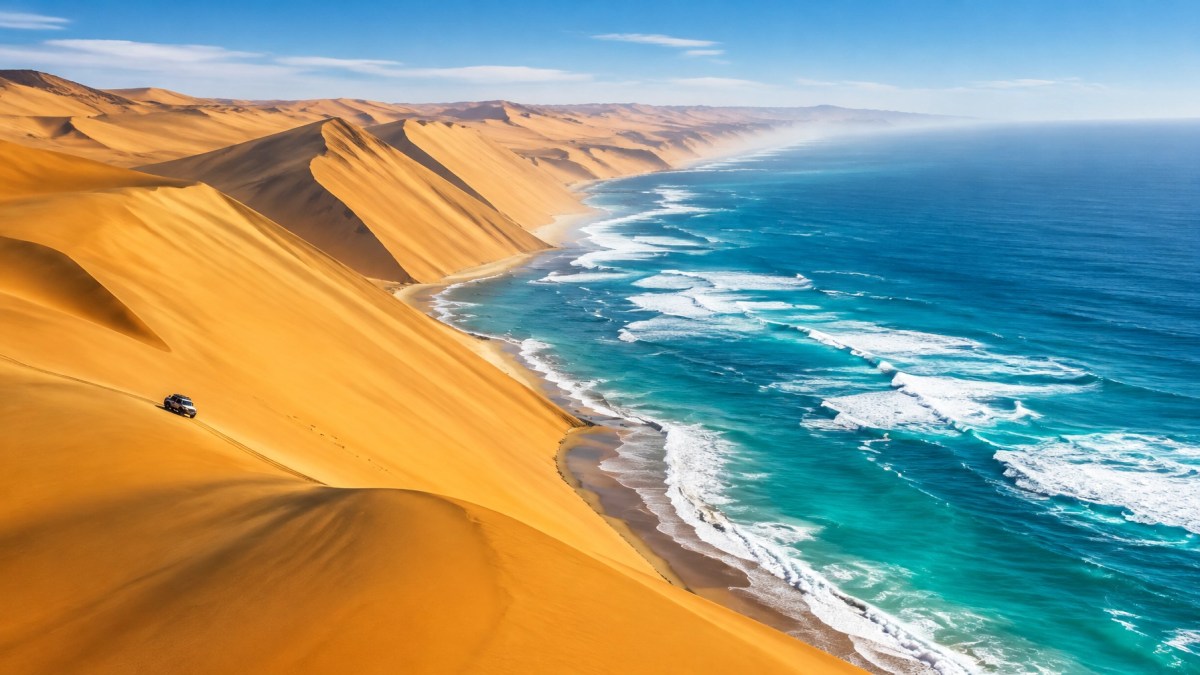
🐚 The Skeleton Coast: wilderness at the edge
The Skeleton Coast takes its name from the wrecks, whale bones and bleak seascapes that once made this foggy shore a graveyard for ships. The cold coastal mist still rolls in, even when the interior is bright and hot. At Cape Cross, a vast Cape fur seal colony makes for an extraordinary visit, and a powerful smell. During the November–December breeding season, the reserve may hold around 210,000 seals; keep your distance and follow the paths and guidance on site. Check current information from Namibia’s environment ministry.
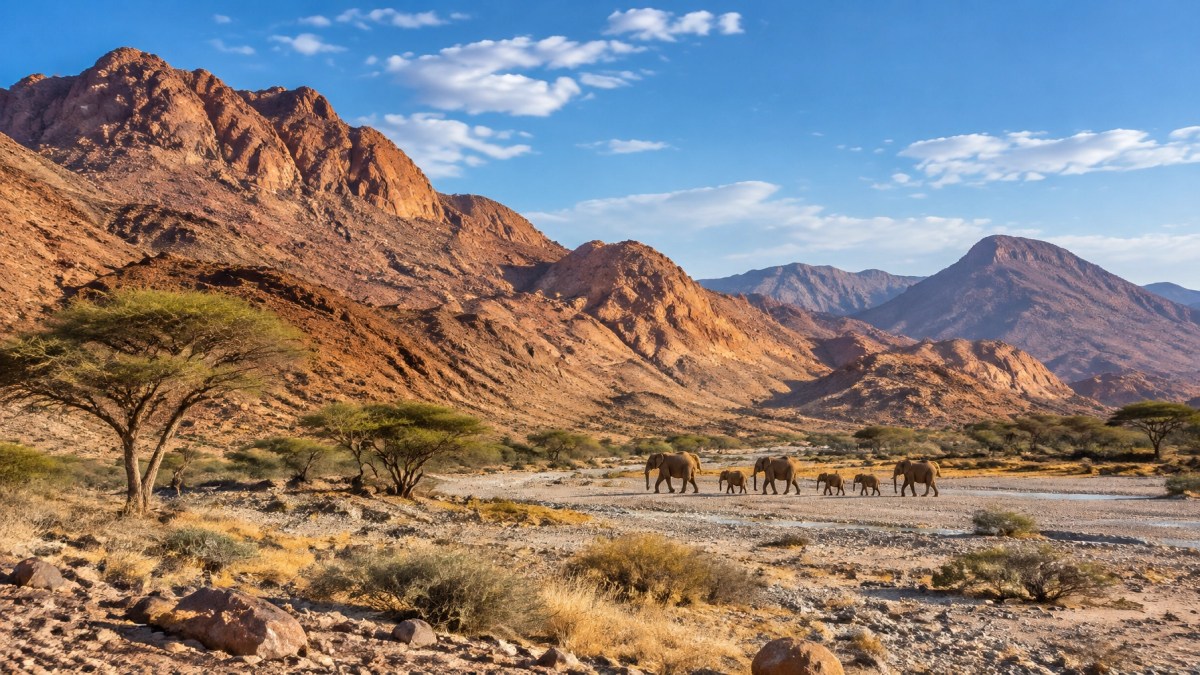
Farther north, access to much of the Skeleton Coast Park is restricted, with some remote lodges reached by light aircraft or specialist guided arrangements. That remoteness is part of its appeal. In the Hoarusib and Hoanib riverbeds, expert guides search for desert-adapted elephants and, more rarely, lions. These are not guaranteed sightings; they are encounters made possible by patience, local knowledge and a landscape that remains genuinely wild. For current access rules, consult the park authority and your lodge before planning a route.
🪨 Damaraland: ancient stories, living conservation
Damaraland pairs rugged beauty with a deep human history. At Twyfelfontein, a UNESCO World Heritage Site, rock engravings trace animal life and spiritual traditions across stone: one of Africa’s largest concentrations of petroglyphs. Nearby, the Organ Pipes and Burnt Mountain turn geology into a landscape you can wander through slowly.
The wildlife here asks you to look more closely. Conservancy guides track desert-adapted black rhino on foot, while elephants move through the Huab and Ugab riverbeds. A guided rhino walk is a rare privilege, not a guaranteed wildlife encounter; follow your ranger’s instructions and let the animal set the distance.
Namibia’s community-conservancy model is central to this experience. Local communities help manage wildlife and tourism, and the benefits can support livelihoods and conservation. The details differ between conservancies, so choose operators who can explain their local partnerships clearly. If you visit Himba communities in Kaokoland, arrange the encounter through a community operator, ask permission before taking photographs, and treat people as hosts, not attractions. The official community-tourism directory offers a helpful place to explore locally led options.
🦓 Etosha: the waterhole theatre
Namibia is also a rewarding safari destination. In Etosha National Park, a vast white pan anchors a landscape of grassland, mopane woodland and waterholes. In the dry months, animals gather where water remains. At camps such as Okaukuejo, Halali and Namutoni, floodlit waterholes can offer a memorable evening pause: sometimes with rhino or lion in view, always with wildlife on its own terms.
From May to October, dry conditions and thinning vegetation often make game viewing easier. November to March brings heat, greener scenery, newborn animals and migratory birds, though thicker bush can make sightings harder. Etosha is one of Africa’s great self-drive parks; it complements the desert rather than replacing it. Stay within the rules, remain in your vehicle where required and allow enough nights to explore at an unhurried pace.
✨ A night sky with no rival
In NamibRand Nature Reserve, the darkness is part of the destination. Recognised as an International Dark Sky Reserve, this is a place for star beds and sleep-outs, where the Milky Way can spill across the sky without a city glow to soften it. Bring a warm layer, step outside, and give your eyes time to adjust. The scale of the night arrives slowly, then all at once. Explore NamibRand’s dark-sky programme.
🍷 What you’ll taste along the way
Remote Namibia serves up welcome surprises. Expect game such as oryx, kudu and springbok at lodge braais, Swakopmund oysters from the cold current, German-inspired pastries and cafés, and craft beer in Windhoek. Lodge kitchens are often remarkably good, especially considering the distance their ingredients have travelled. A long day on the road ends well when dinner is waiting beneath a wide desert sky.
🧭 When to go, and how to travel
For clear desert light and strong Etosha viewing, May to October is the classic window; June to September is especially popular. November to March is hotter, with occasional dramatic rain and a brief green transformation. The Skeleton Coast stays cool and foggy throughout the year. Find broader seasonal context through the Namibia Tourism Board.
Namibia is vast. A two-week circuit is realistic, but driving days between highlights can take four to six hours or more. Self-drive is one of the country’s great pleasures: roads are often graded gravel, but distances demand respect. Check tyres, plan fuel stops, carry water, follow your rental provider’s spare-tyre advice and avoid driving at dusk or dawn, when wildlife may be on the road. For remote areas, guided travel or light-aircraft transfers can replace long transfers with extraordinary aerial views.
Before departure, check current UK passport and visa advice, arrange a travel-health consultation about malaria risk in the north, and review the latest local guidance. Namibia uses the Namibian dollar, pegged to the South African rand; rand is also accepted. Wi-Fi is available at many lodges, but often disappears on the road. Leave no trace, stay on permitted routes, and respect conservancy rules.
🗺️ Two ways to find your Namibia
Ten days, desert to savannah: Windhoek, two nights at Sossusvlei, two in Swakopmund, two in Damaraland, then three around Etosha, with the route adapted to your flights and drive times.
Fly-in, quietly spectacular: keep the same spirit, but use light aircraft between selected lodges to spend less of the holiday on long transfers. Add a Skeleton Coast stay where access and availability allow.
We can tailor either journey around the pace you want, from self-drive freedom to a beautifully guided lodge circuit. Small desert and Skeleton Coast lodges have few rooms and often book first for May to October, especially June to September. Light-aircraft seats and rhino-tracking permits are limited too. We can also explore last-minute options where availability remains.
Namibia does not ask you to fill every hour. It asks you to watch the light move, listen to the wind cross the dunes, and discover how restorative a little space can be. Timeless travel, whenever wherever.
For the direct link to this guide, comment SILENCE on our Instagram post and we’ll send it to you by DM. To begin planning, visit Raheem Tours.
